
Travel Expense Deduction
Travel expense deductions are tax deductions for commuting to and from work and for business trips. Many people utilize the right to claim a travel expense deduction, but as much as half of all deductions are deemed incorrect by the Swedish Tax Agency. The purpose of the assignment was to make it easier for citizens to make a correct deduction.
Results
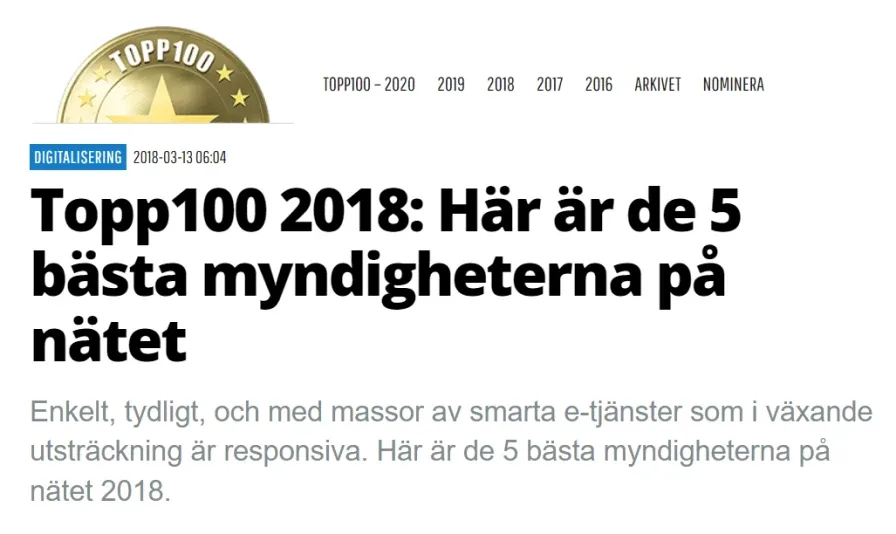
The work has been mentioned in several news articles praising the Swedish Tax Agency’s efforts to simplify travel expense deductions.
Lessons Learned
- Freedom to explore freely leads to great results
- Cross-functional teams with expert knowledge advance quickly
- A small and tight-knit team makes knowledge sharing easy
Our Roles
We served as both project managers and UX designers in a small cross-functional team consisting of, in addition to ourselves, two administrators and a communicator.
One challenge with the setup was that three out of five team members were not accustomed to agile work. This resulted in a somewhat slow start where we revisited and discussed agile principles several times. It taught us the importance of giving individuals time and not rushing too quickly. In the end, we were a fantastic team and accomplished a lot in just 6 months.
Approach
We approached the assignment by conducting interviews with citizens who had used travel expense deductions and citizens who had not, despite living outside the city.
We came into contact with people to interview through flyers, social media, and our networks, among other things. We also interviewed administrators to understand more about common errors and had lessons with the administrators on the team to better understand travel expense deductions and the rules surrounding them.
Through this work, we created personas and prioritized among them. One of our key findings was that the people we interviewed identified themselves by their choice of transportation and that there are specific rules that are difficult to understand.
Changing information on the website
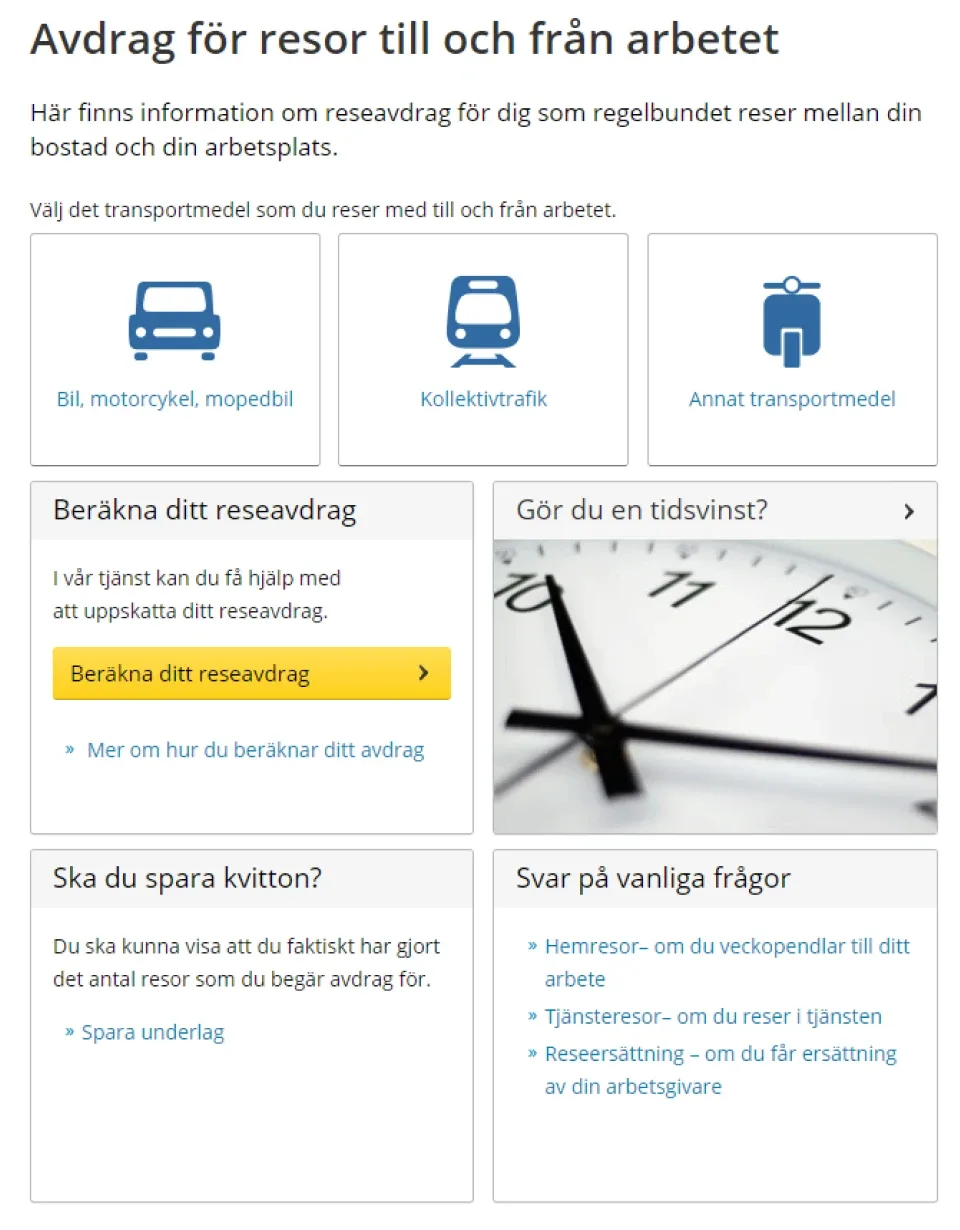
After conducting interviews and gaining an understanding of the problem, we mapped the website to get an overview of how the information was structured.
We then used Balsamiq to build a new structure and user testing to validate and iterate our hypothesis. The choice of transport was placed at the center, and the most common questions were on the main page.
Building an e-service
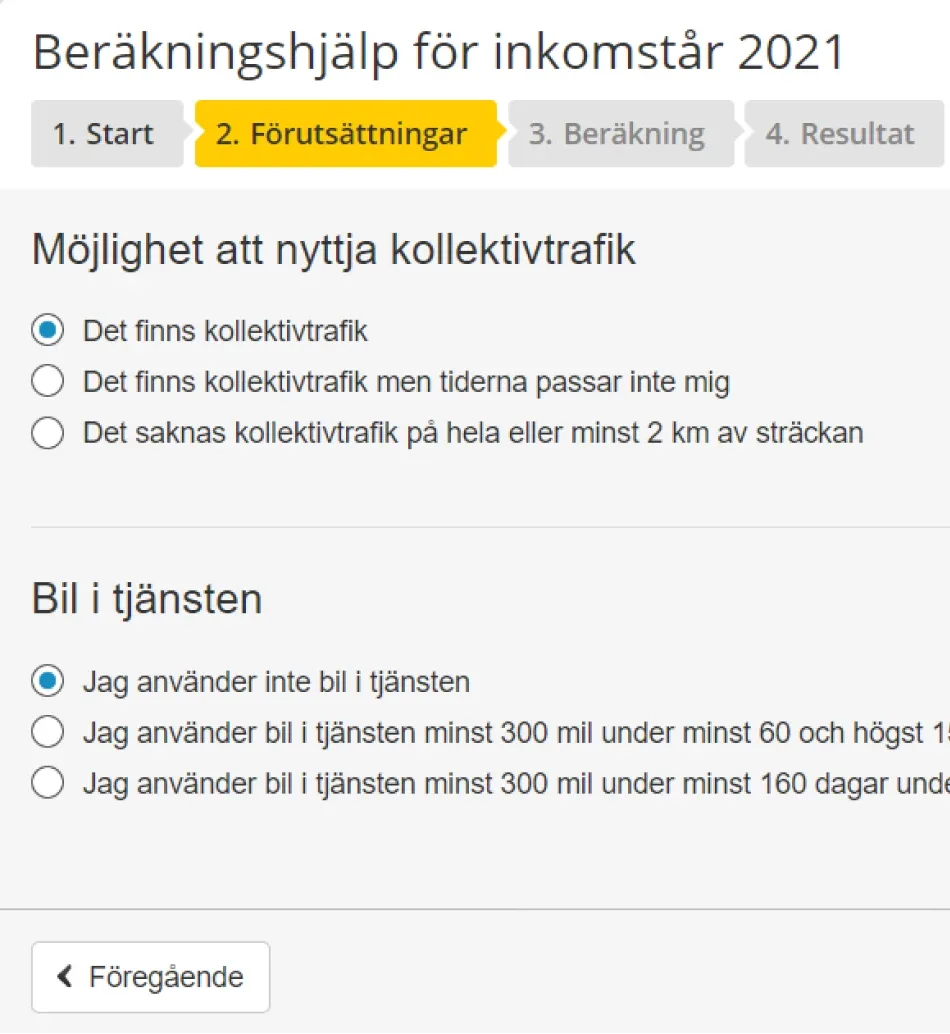
In addition to reviewing the information, we developed a simple e-service. The idea behind the service was to allow users, step by step, to consider questions regarding their travels and eventually be able to answer whether they are entitled to a tax deduction.
The work was done iteratively and user-tested multiple times.
Conclusion
When we concluded the project 6 months later, we had changed the entire information structure around travel expense deductions on the website and built a simple calculation aid for those who want to claim travel expense deductions. In addition, we had gotten to know skilled and resourceful colleagues and learned even more.