
Product Strategy
Due to Covid-19 and the assignment to manage benefit payments for “Korttidsarbete” (short-time work), the Product and IT organization at Tillväxtverket (the Swedish Agency for Economic and Regional Growth) grew from one to several development teams in about a year. We helped them unite the teams and create common understanding through shared goals.
Due to Covid-19 and the assignment to manage benefit payments for “Korttidsarbete” (short-time work), the Product and IT organization at Tillväxtverket (the Swedish Agency for Economic and Regional Growth) grew from one to several development teams in about a year.
Being a larger organization with many new colleagues increased the need to unite the teams and create common understanding through shared goals. We helped Tillväxtverket with this by developing a product strategy with product goals for each development team, which in turn depended on goals for the organization as a whole.
The Challenge
“What is the goal for my team?” “What should we deliver against to create the highest value?”
This was something we heard more and more from product owners and team members. Together, we began discussing what needed to be done to solve this problem.
These discussions led to the development of a product strategy that linked business goals to clear objectives and key results for each team.
Lessons Learned
- It is important to involve managers and decision-makers at various levels in the development process to ensure continuous anchoring.
- Give Product Owners and the team time, and remember that the journey is part of the goal.
- View the work as a long-term process and create supportive processes during implementation.
- It is difficult to find leading key metrics, but the discussions that get you there are important.
- Start on a smaller scale; don’t try to implement this in all teams simultaneously. Instead, begin by testing it on a smaller scale and build confidence by demonstrating success in one team.
Our Approach
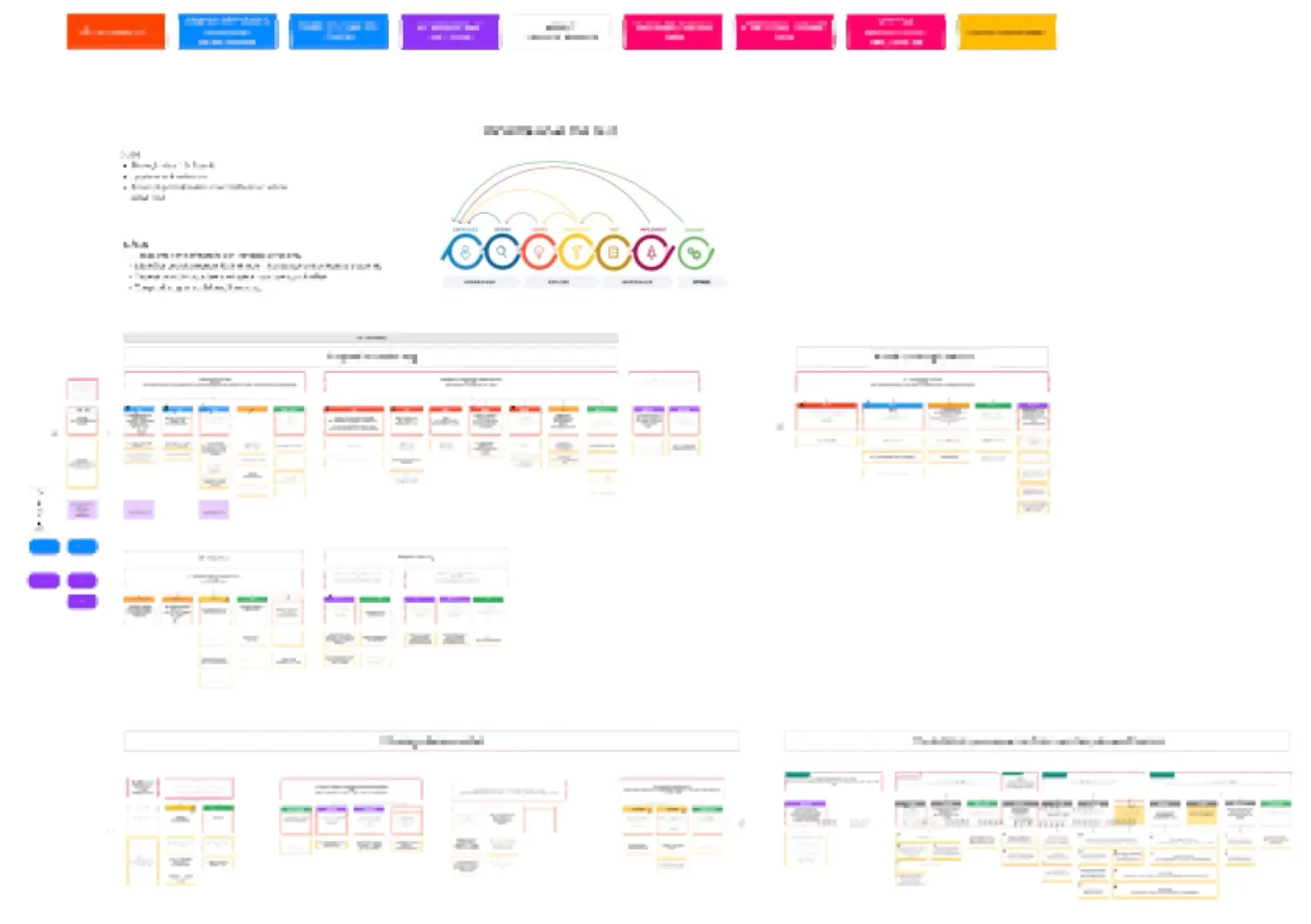
Business and Product Goals
The starting point for the product strategy was a series of workshops with stakeholders where we discussed the product vision using a “Product vision board.” Through this work, we created a clear picture of what the vision means, why it is right for us, and what guiding principles we should carry with us in everything we do.
However, we felt that more was needed to create strategic guidance for the teams. This resulted in a product strategy based on OKRs. OKR is a goal-setting methodology that connects team goals with company/business goals, making it possible to measure and monitor them.
The Four Levels of Product Strategy
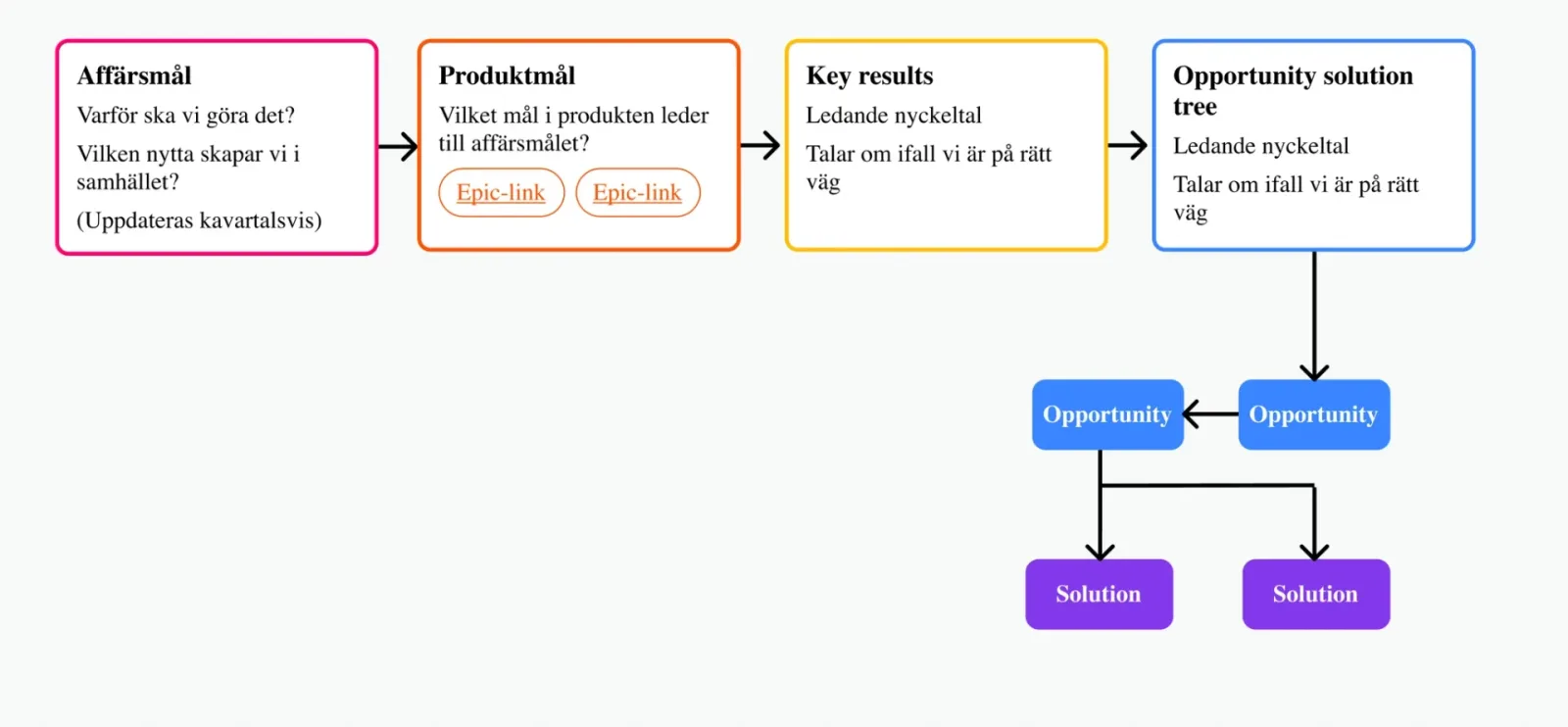
Product strategy has four levels.
The first level addresses the business perspective: Why should this be done? What benefits will this goal create for the organization?
Level two “Product Goals” is the product owner’s responsibility to set and anchor. The goal should answer why our product should do something. Product goals can be quite broad, but by linking them to key results, they become well-defined.
Level three “Key Results” tells us which leading metrics need to be moved to achieve the goal. It is important that these are leading, meaning we should be able to continuously see that we are getting closer to our goal and not have to wait 6 months to see if we hit the mark.
Level four “Opportunity Solution Tree” Hypotheses/opportunities we have to make the shift. It connects business goals to customer problems and potential solutions to get there.
Team Responsibility
The final level is the team’s responsibility and involves working together to find different ways (opportunities) to achieve the goal and move the key metrics.
What we believe is important is that this is something the team does together and collectively feels responsible for. Some examples of different types of methods we used to explore what could be done include:
- Customer journeys
- Design studios
- Design sprints
- In-depth interviews
- Usability tests
- Quantitative surveys