Save Sweden's businesses
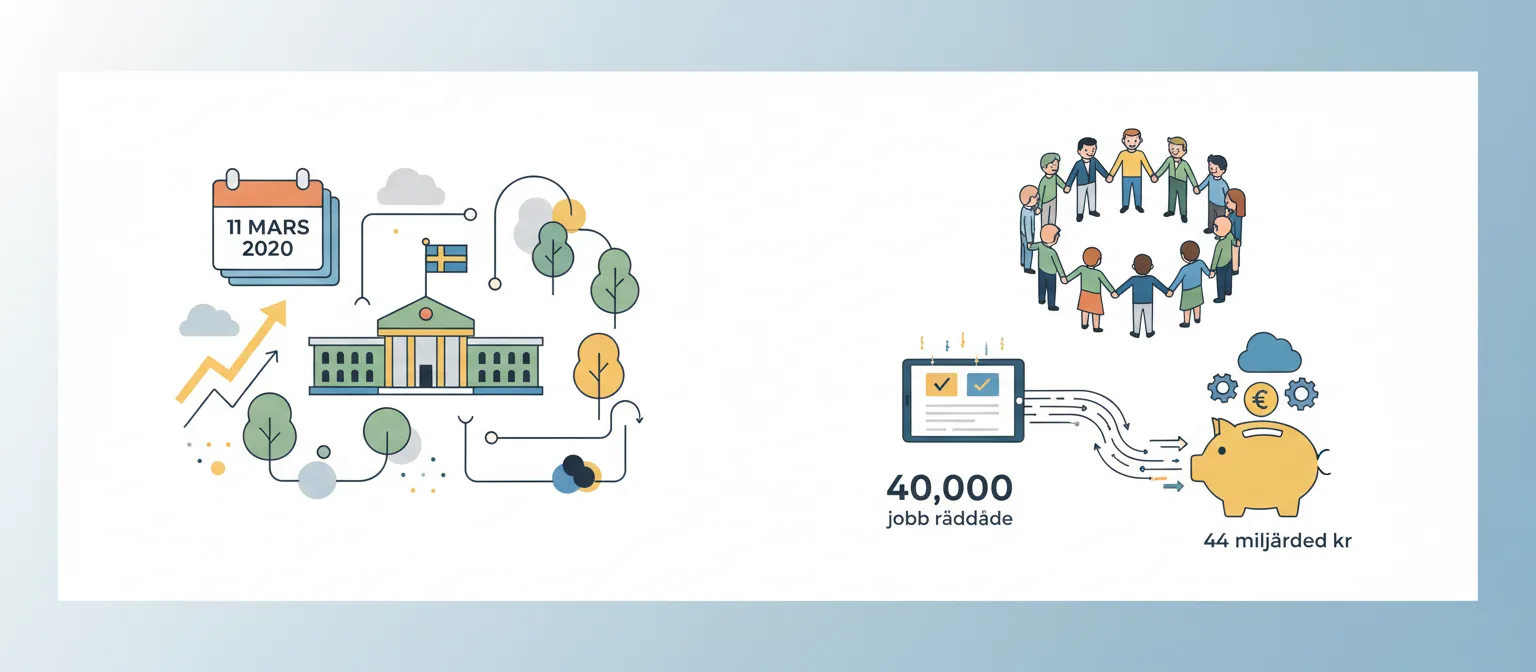
On March 11, 2020, the government introduced the Short-term Work Allowance, and the Swedish Agency for Economic and Regional Growth (Tillväxtverket) was commissioned to manage the support. Together, we saved 40,000 jobs and digitized the management of 44 billion SEK. The support came into effect on April 7 but applied retroactively from March 16, 2020. Overnight, Tillväxtverket shifted its focus to: "We will save Sweden's businesses"
Results
- Together, we saved 40,000 jobs
- We digitized the management of 44 billion SEK that was to be distributed to companies
- We restructured an entire agency to work agilely and understand the value of user-centric working methods
- We were able to unite an agency by quickly visualizing what the short-term allowance entailed and what caseworkers would encounter
- We managed to deliver an application service despite legislation changing 22 times during ongoing development work
- Through usability testing, we avoided pitfalls that would have caused the support organization to drown in phone calls and emails
When everything stood still

A deserted Scania after staff were sent home with short-term support in spring 2020.
Photo: Lina Larsson
Prerequisites
The short-term allowance is based on a completely different legal foundation than the support normally handled by Tillväxtverket and has a different case cycle.
Normally, the agency handled a few thousand cases per year, while this support system was expected to handle approximately 100,000 cases. We had approximately three weeks to deliver an application service.
At the start of the assignment, we were a product development team, including three UX designers.
How we proceeded
The Start
UX, together with the Product Owner, initiated a daily stand-up where we focused on our common goal in a cross-functional group with several leaders and appointed representatives from various units within the agency.
The organization was not accustomed to agile working methods, but the time frame and many unknown factors left no other option. By starting the conversation in daily stand-ups, we gained an understanding of the work being performed.
We also collaborated closely with the legal department, continuously visualizing the support management system we were building. This helped us find common ground and understanding.
Consensus
To create consensus within the organization by being as transparent as possible with new solutions, while minimizing unnecessary time spent on compilations and presentation materials, we held verbal walkthroughs where we demonstrated both prototypes and solutions in the test environment.
We also gathered feedback and ideas; often, over 300 employees participated, which generated immense energy and co-creation with the entire organization. This working method was possible due to the remote-first culture that the agency was forced into due to the pandemic, allowing us to concentrate our efforts without geographical or physical limitations.
We continued for a year, but as time went on and the organization matured, we found it better to let caseworkers demonstrate and explain. As UX designers, we provided support when needed.
Verbal walkthroughs with demos proved to be a very powerful tool for early problem detection and uniting different functions within the organization.
Scenarios
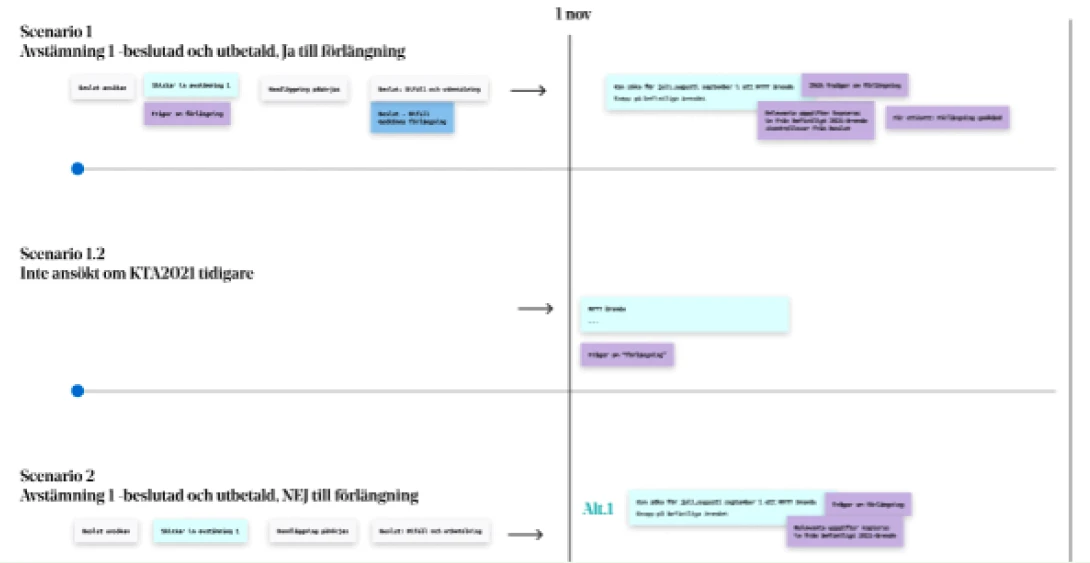
Setting up scenarios was key to quickly understanding the next phase in the case cycle and its complexity. It also allowed us to see how, for example, legal aspects influenced development and what decisions were needed to move forward.
We conducted this exploratory work in close collaboration with developers, lawyers, and other experts from the organization to ensure that the ideas were feasible.
Working methods
Throughout the project, we worked in short cycles and continuously tested our proposed solutions. We also invited stakeholders and leaders to follow our work process and listen to usability tests. This was a powerful tool for gaining an understanding of why user-centric working methods are so important.
By working user-centrically with agile methods and always listening to the support organization, we could prevent problems and react quickly to them.
Lessons Learned
- Effective digital tools for collaboration and co-creation are essential for remote teamwork.
- Visualizing and working closely with legal is key when developing rapidly and dealing with regulatory requirements.
- Inviting decision-makers to usability tests creates an understanding of why UX work is important and helped us make the right decisions.
- Trust and confidence between UXers and developers, along with close collaboration, were prerequisites.
- Demos are a powerful way to unite stakeholders and provide transparency.
- One of the prerequisites was that the entire agency was distributed and working from home; many could come together when needed, which created a sense of belonging and focus.