Hajpa, safe meeting places for young people
Hajpa is our own app for municipal youth centres. It brings young people, guardians and staff together in one app. Östersund was first, where Hajpa has been used at all eight municipal youth centres since 6 November 2026. Now we are taking the app to more municipalities.
Most cases in our portfolio are about work we have done for others. Hajpa is different. We are co-founders of the company behind it, Punkt Fyra, and we own the whole product, from research and design to code, operations, marketing and sales.
We are a team of four. Two of us have a background in UX and two in development and operations. What lets such a small team carry a whole product is that we work with agentic engineering, where AI agents do much of the hands-on work while we steer, review and make the decisions. That lets us help each other across roles. The designers build in the code, the developers take part in research and everyone can produce material for a launch.
Results
- Östersund was first. Hajpa is used at all eight municipal youth centres there, after a pilot at Lillsjögården during the autumn
- Interest from other municipalities is strong, and we are now in talks with several of them
- Young people check in with a QR code, and the statistics for the municipality fill themselves in
- Guardians approve their child’s account with BankID, and all data is stored within the EU
- Staff from all eight centres were trained together two days before launch
Background
Östersund’s youth centres already used an app, but it did not work for them. The staff and the youth team got in touch with us. They wanted help building an app that actually fit what an evening at the centre looks like, with fewer features that work well.
At the same time, the road to young people is getting narrower. Today the centres reach their visitors mainly through Instagram and Snapchat, and a Swedish government inquiry proposes a 15-year age limit for social media. The municipality needs its own safe channel to young people. A channel without algorithms or ads, where parents get insight and staff always know who is in the building.
One app, three perspectives
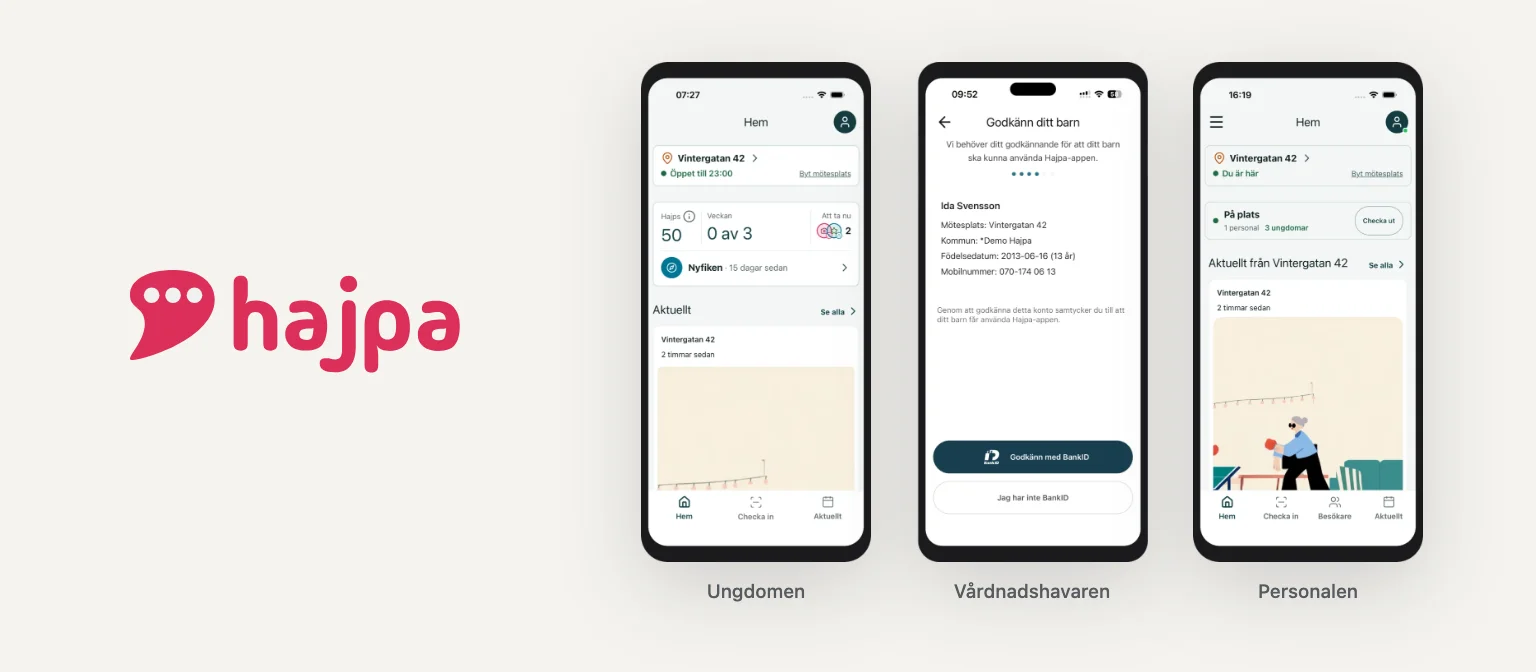
Hajpa has three roles, each with its own flow. They connect: the young person signs up, the guardian approves and the staff see who is there.
The young person
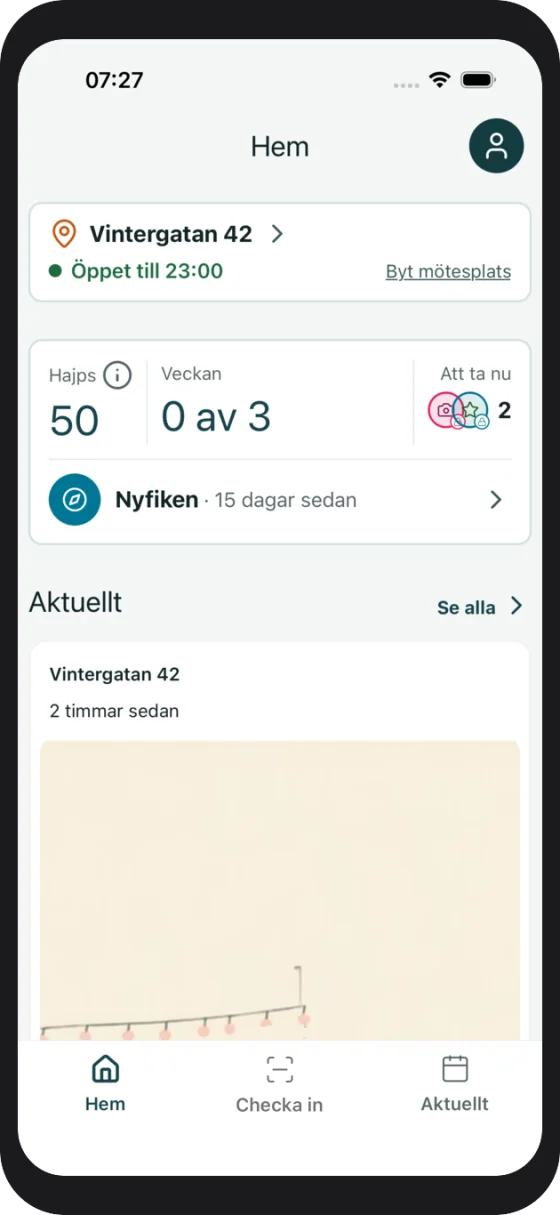
Checks in with a QR code, collects hajps for their visits and sees what is happening at the centre.
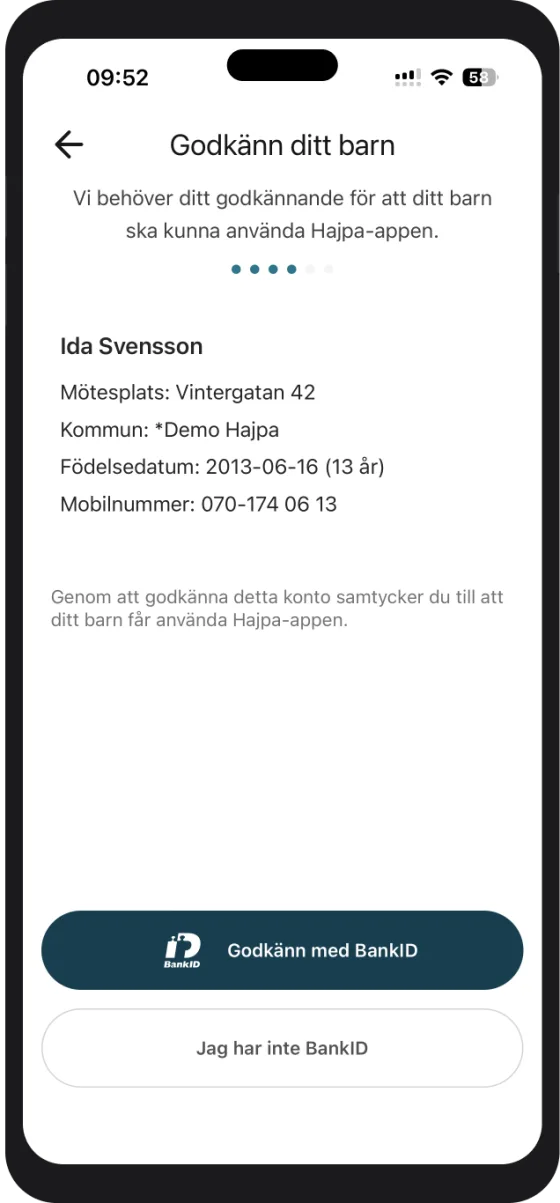
The guardian
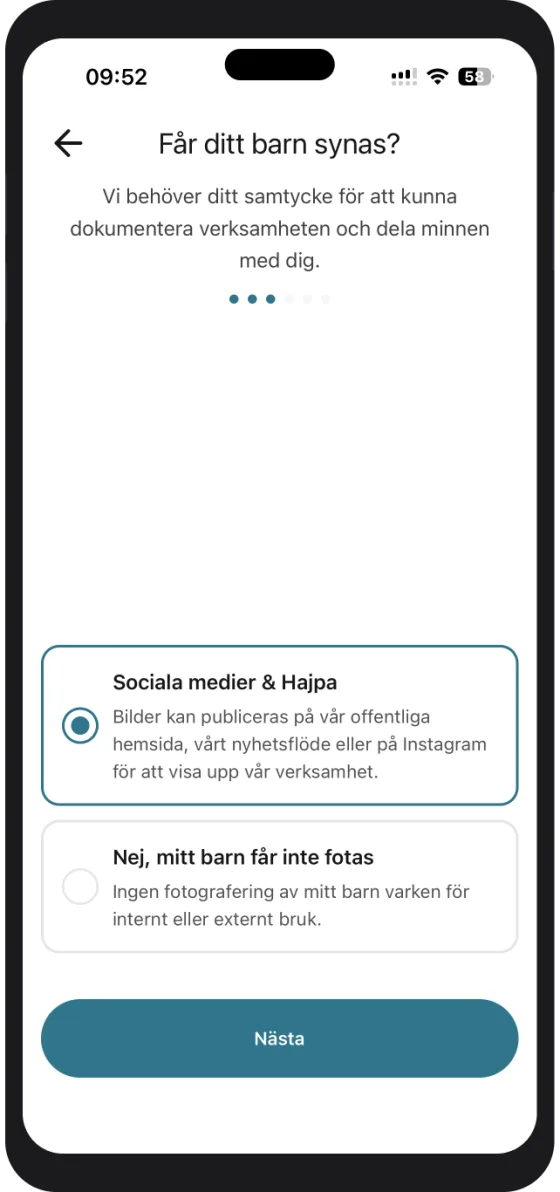
Approves their child's account with BankID and decides whether the child may appear in photos.
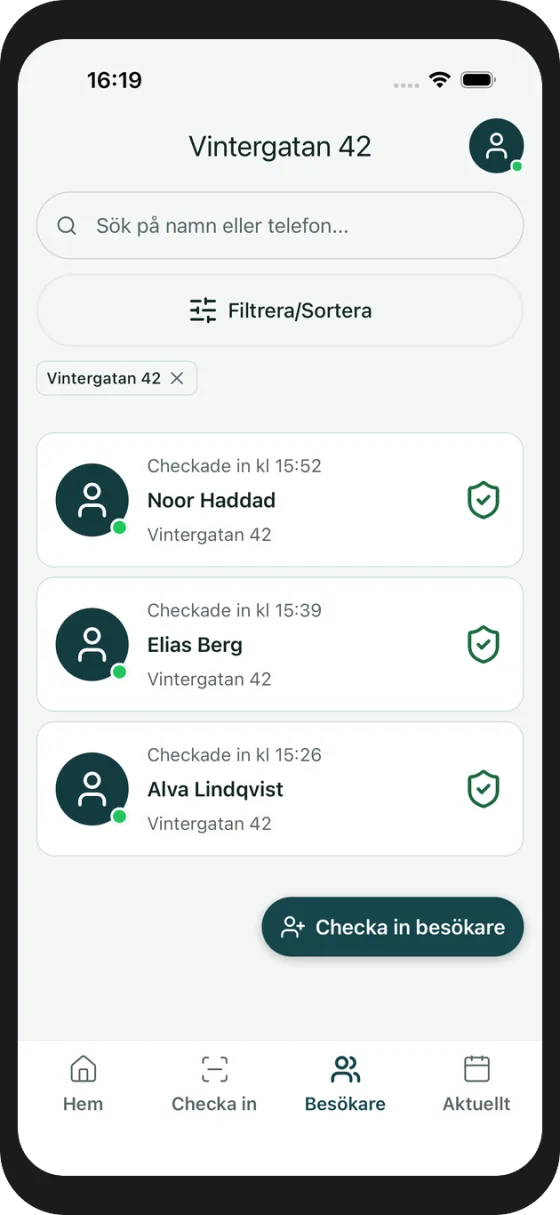
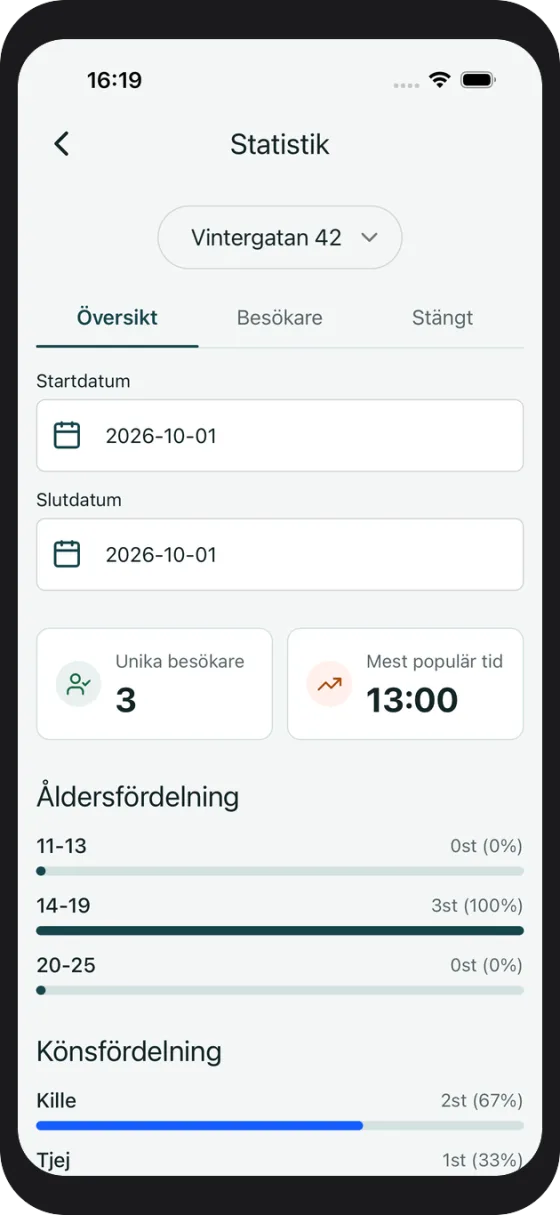
The staff
See who is there, publish news and get statistics without counting by hand.
How we worked
A year out at the centres
Hajpa has grown over a year together with staff and young people at Östersund’s youth centres. We have been there in the afternoons and evenings to see what an evening really looks like. We have interviewed staff about what takes up their time, talked with young people and their families and tested prototypes with young people in many rounds.
Klarby, the municipality that doesn’t exist
The research produced hundreds of observations from different centres, ages and roles. To keep it all in mind at once, we gathered the patterns into a made-up municipality, Klarby, with its own meeting places, visitors and staff. Every design decision could then be tested against a specific evening at a specific centre.
Onboarding for short attention spans
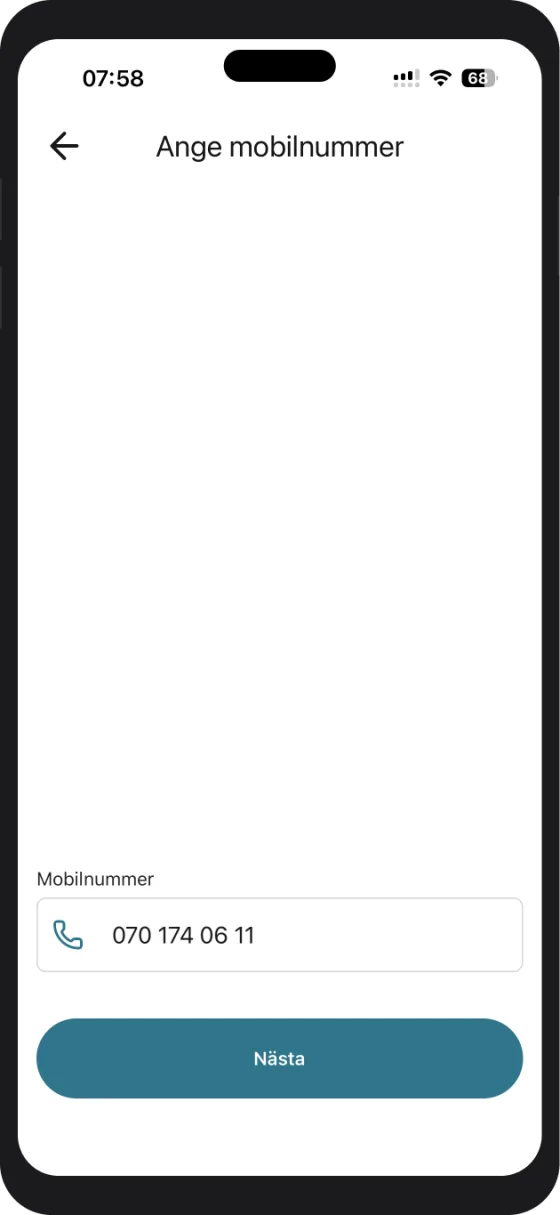
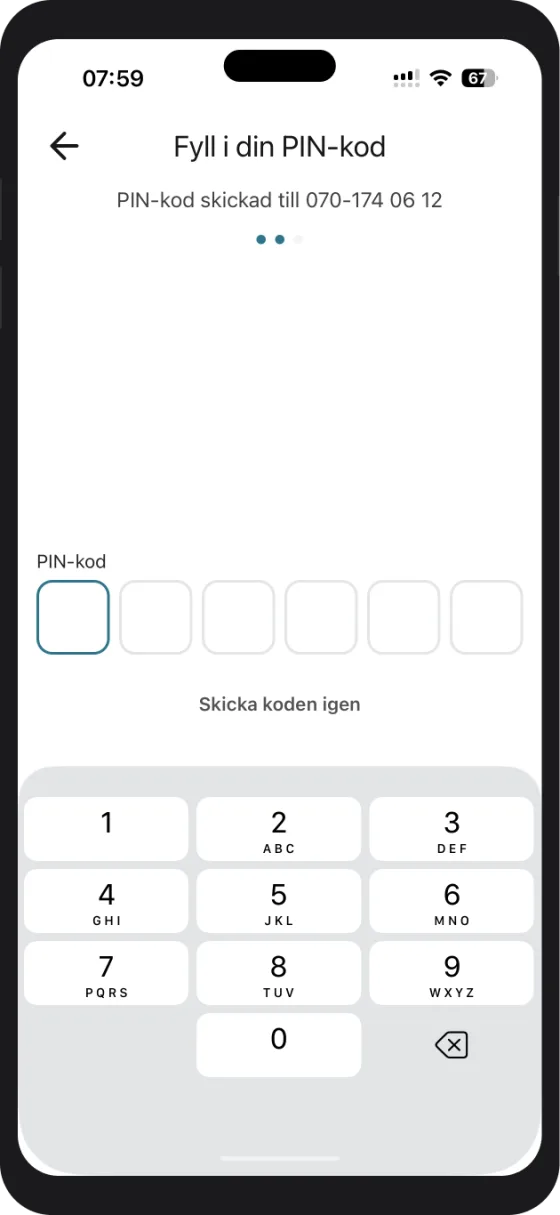
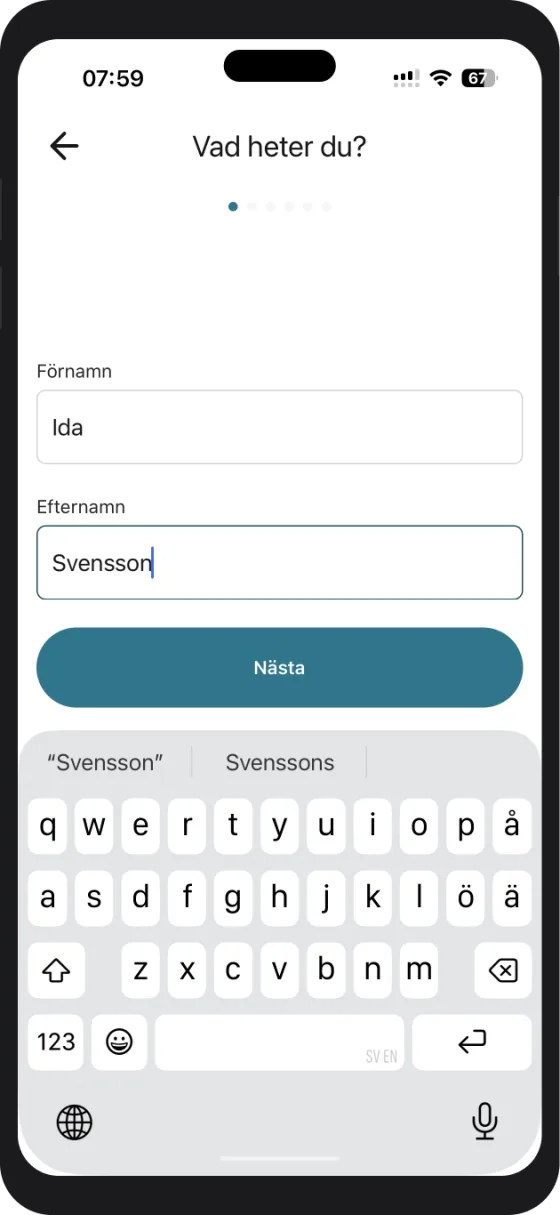
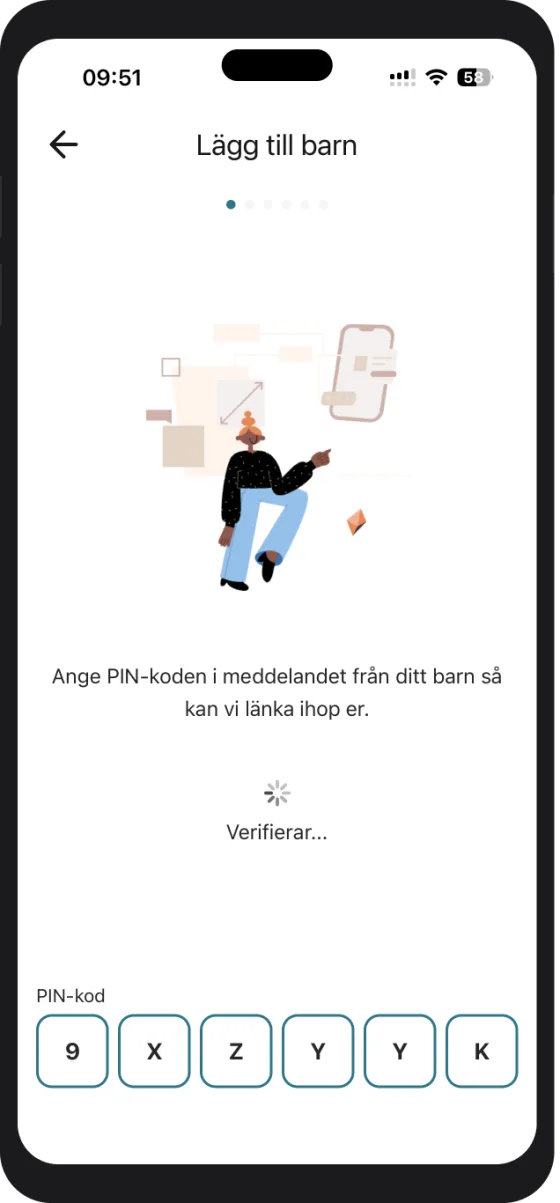
Young people have no patience for complicated forms. Sign-up is split into short steps with one question at a time. There is no password to remember, just a mobile number and a code by text message. We only ask for what staff need to recognise the visitor.
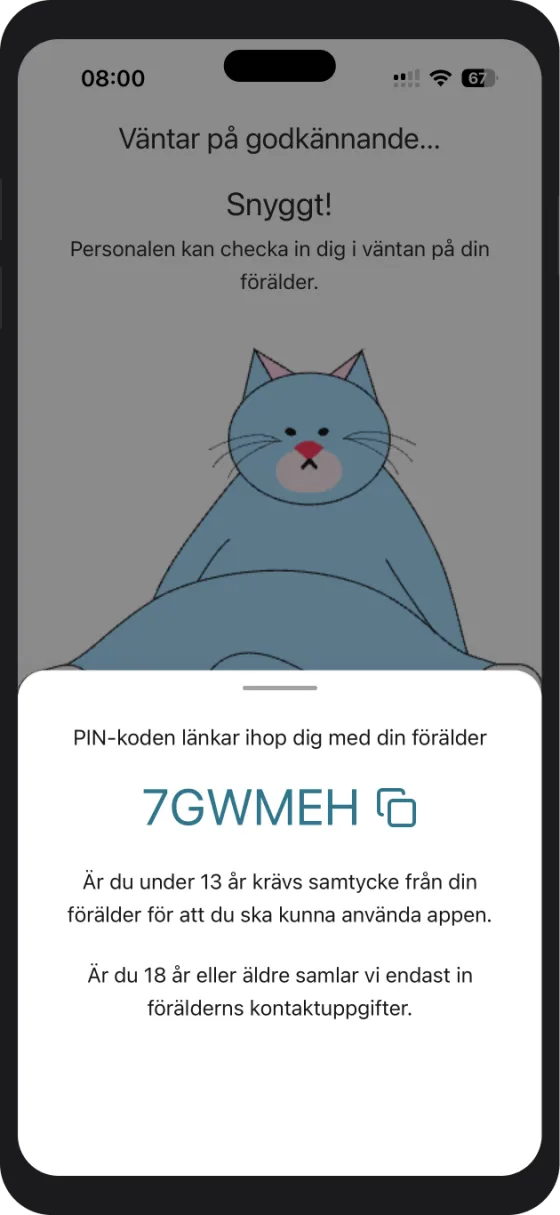
A young person under 13 needs a parent’s approval before the account is ready. While the approval is pending, staff can check the visitor in, so no one is left standing at the door because a parent hasn’t replied yet.
Game elements that make checking in fun
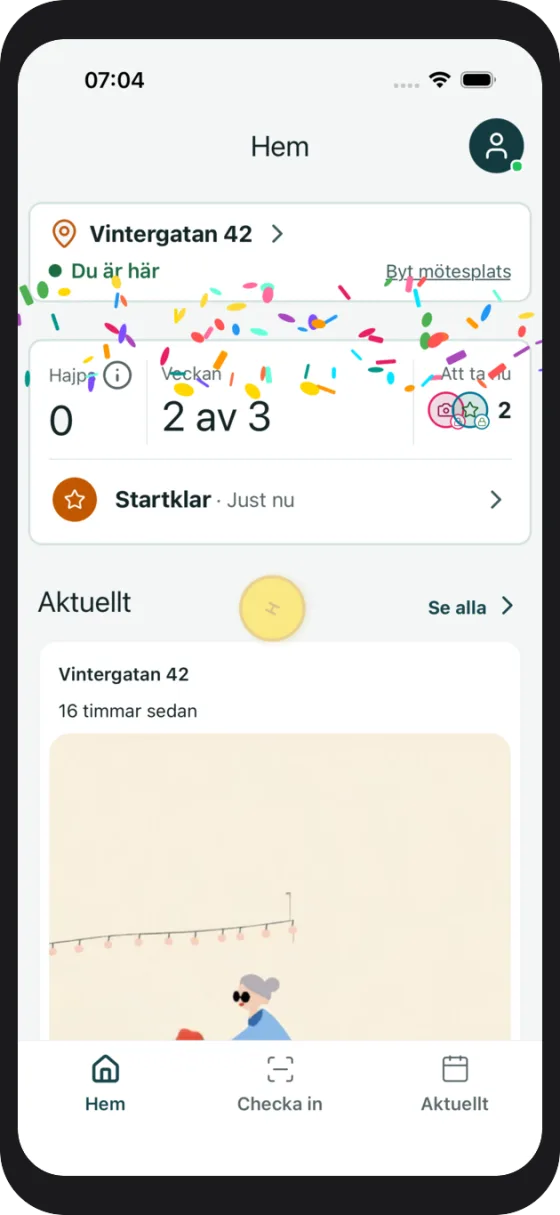
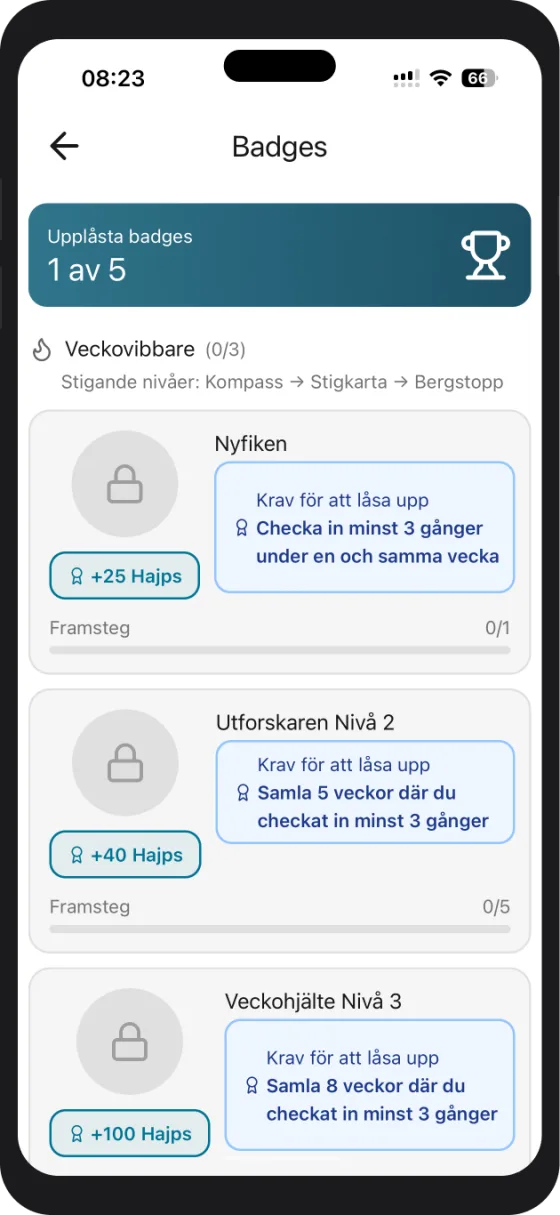
The whole system relies on young people checking in. If staff have to nag, the statistics are wrong and safety suffers. We wanted young people to want to check in. Every check-in earns hajps, and several visits in the same week unlock badges and a weekly star. The first check-in is celebrated with confetti. Each centre decides what hajps can be traded for.
We have been careful with the balance. The game elements reward showing up at the centre, not staying in the app.
GDPR and data protection, a major piece of work
An app for children and young people in a municipal service sets high demands on data protection, and it has been one of the largest parts of the work. It is about much more than a privacy policy:
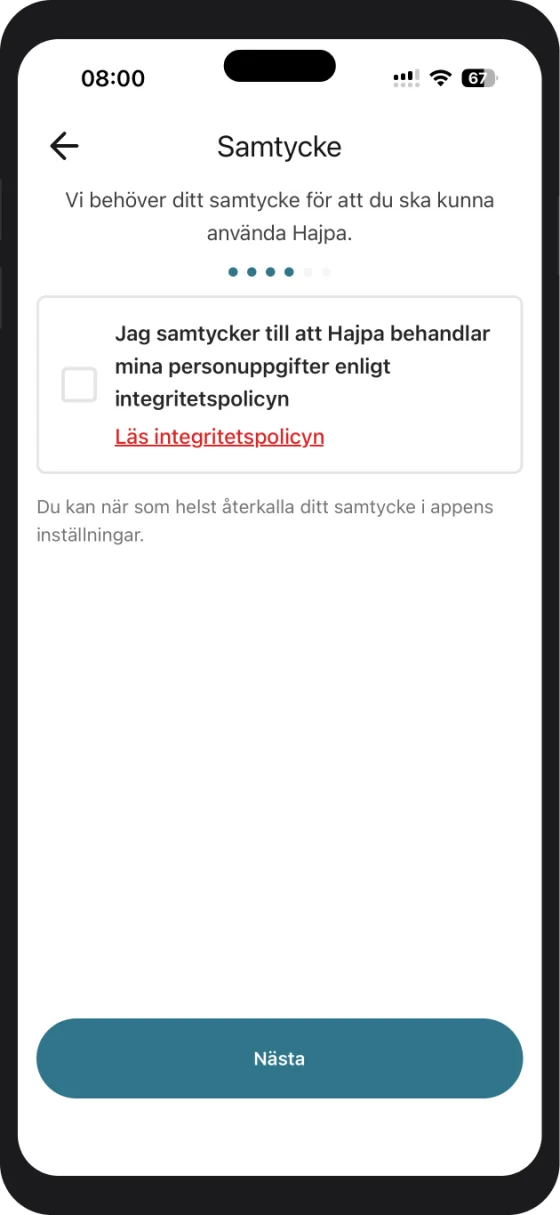
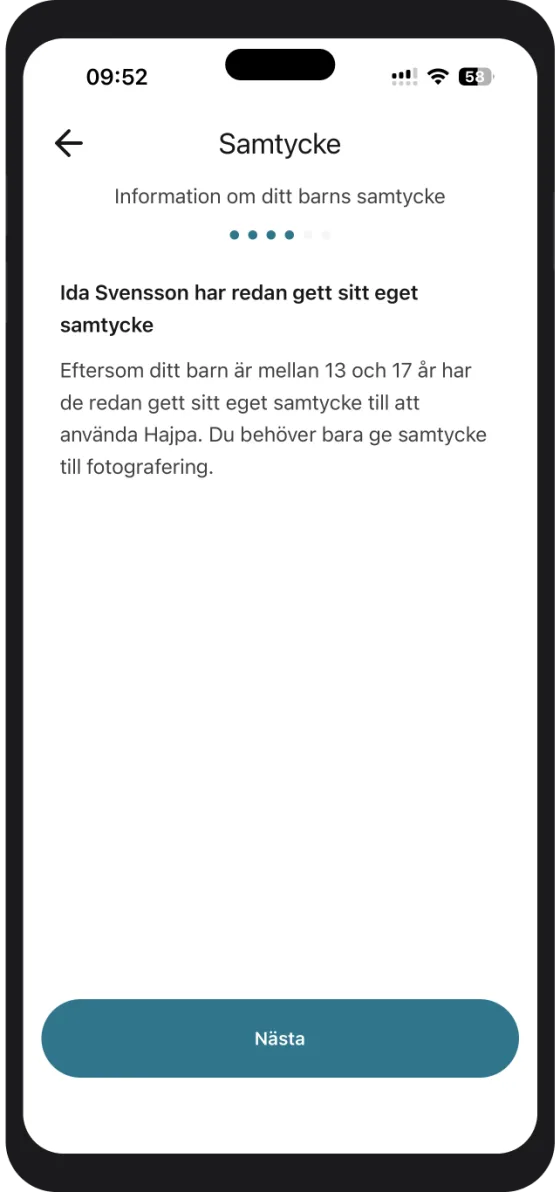
- Consent depends on age. Under 13 a parent’s consent is required, from 13 the young person gives their own and the parent decides about photos
- Guardians are identified with BankID, so the right adult is linked to the right child
- Data is split into layers: the account, the municipality’s own data and anonymous statistics in groups of at least five
- Identifiable attendance is kept for 14 days, and all data has fixed retention periods
- All data is stored within the EU, with no transfer to third countries, and staff log in with two-step verification
- The municipality gets a data processing agreement and material for its own impact assessment (DPIA)
Accessibility from the start
A municipal app has to work for everyone. We have reviewed the app against WCAG 2.2 AA and built accessibility checks into the development workflow, so new screens don’t get worse. The app has its own accessibility statement.
With the staff all the way
Before launch we produced material for the whole roll-out: text for the municipality’s website, posts for the centres’ own channels and training for the staff. Staff from all eight centres were trained together on 4 November.
Voices from Östersund
Johan is team leader of the youth team and Annika is unit manager at the culture and leisure administration. In the film they describe what it has been like to develop Hajpa together with us.
A text version of the film is available under the player.
Text version of the film
The film has speech in Swedish with Swedish subtitles, and instrumental music. This is what is shown, what is said and all text on screen, in the same order as in the film. What is said is translated into English; text on screen is in Swedish, with the English meaning in brackets.
The question
Hanna and Luke by the screen with Hajpa's presentation, the staff seen from behind. Question on screen: “Hur har samarbetet kring Hajpa varit?” (How has the collaboration around Hajpa been?)
Annika on the collaboration
Annika and Johan sit next to each other on a sofa. Name on screen: “Annika, Enhetschef, kultur- och fritidsförvaltningen” (Annika, unit manager, culture and leisure administration).
Annika: “I think it has been great. Very easy to reach you. Very responsive, and above all very keen on everything we come up with. I think it has worked fantastically well. We have had quick answers.”
Johan on the meetings
Name on screen: “Johan, Teamledare, ungdomsteamet, Östersunds kommun” (Johan, team leader, youth team, Östersund Municipality).
Johan: “From the very first moment it feels like we have had really creative meetings, where you have been very curious. It has never felt like you came with a finished product that you wanted to throw at us; rather, it is as if we have approached a need together.”
Annika on the youth centres
Annika: “I also think, this very collaboration, that you have been out at the youth centres, really out in reality, and seen for yourselves. That also contributes to the finished product.”
To other municipalities
The hall with the staff and the screen. Question on screen: “Om en annan kommun frågar om Hajpa, vad säger ni då?” (If another municipality asks about Hajpa, what do you say?)
Annika: “Well, there is only positive things to say. You do have a good product.”
The end
Hajpa's logo on a light background. Text on screen: “Från 6 november finns Hajpa på alla fritidsgårdar i Östersund.” (From 6 November, Hajpa is at every youth centre in Östersund.) and “hajpa.nu”.
You can focus more on being a youth worker, being with the young people and doing activities.
It has never felt like you came with a finished product that you wanted to throw at us.
That you have been out at the centres, really out in reality, and seen it, that helps too.
Lessons learned
- Being there beats every other method. It was at the centres that we understood what the staff needed
- With agentic engineering a team of four can build, run and sell a whole product, as long as everyone can help across roles
- A made-up municipality makes scattered research useful in every design decision
- Every extra onboarding step costs you young people. Short steps and no password make a difference
- Check-in works when young people want to do it, not when staff have to remind them
- Data protection for children is design, not just law. It shapes every flow in the app
What’s next
Östersund was the first municipality, but not the last. We are now working intensively on marketing and sales to more municipalities, and interest is strong. Many see the same need: their own safe channel to young people as social media closes its doors to the youngest. At the same time we are following how the app is used at the centres in Östersund and developing it further with staff and young people. Read more at hajpa.nu.