Collaboration within the EU
A three-year preparatory project for the new EU program period 2021-2027 for project financing. The preparatory project consisted of seven sub-projects, with about a hundred project participants working in areas such as law, follow-up, financing and product development.
Summary
In this project, we focused on digitizing the application flow and integrating design principles and working methods into the development work.
We primarily worked together in a cross-functional product development team and used a hypothesis-based method to understand user and customer challenges and identify opportunities for improvement. To validate hypotheses, we used, among other things:
- Interviews
- Usability tests
- Statistical analysis
The customer journey was primarily used to visualize and compile insights.
By working together as a team and early mapping assumptions, the team was able to move from insights to action and create an e-service that resulted in several hundred successful project applications.
Testimonial
“Of the seven groups, Hanna and Tobias were part of the core team for adapting the Swedish Agency for Economic and Regional Growth’s existing case management system to the new EU period. It was important to meet formal system requirements. In addition, Hanna and Tobias constantly aimed to make it easy to do things correctly. This applied both to those applying for EU funding and to the staff at the Swedish Agency for Economic and Regional Growth who process applications, make decisions, follow up, and evaluate the EU-funded projects.”
“Hanna and Tobias contributed greatly to the cross-functional collaboration between the project’s seven groups, which was a prerequisite for the overall success.”
Per Folkeson
Lead Project Manager, Swedish Agency for Economic and Regional Growth
How we proceeded - Working method
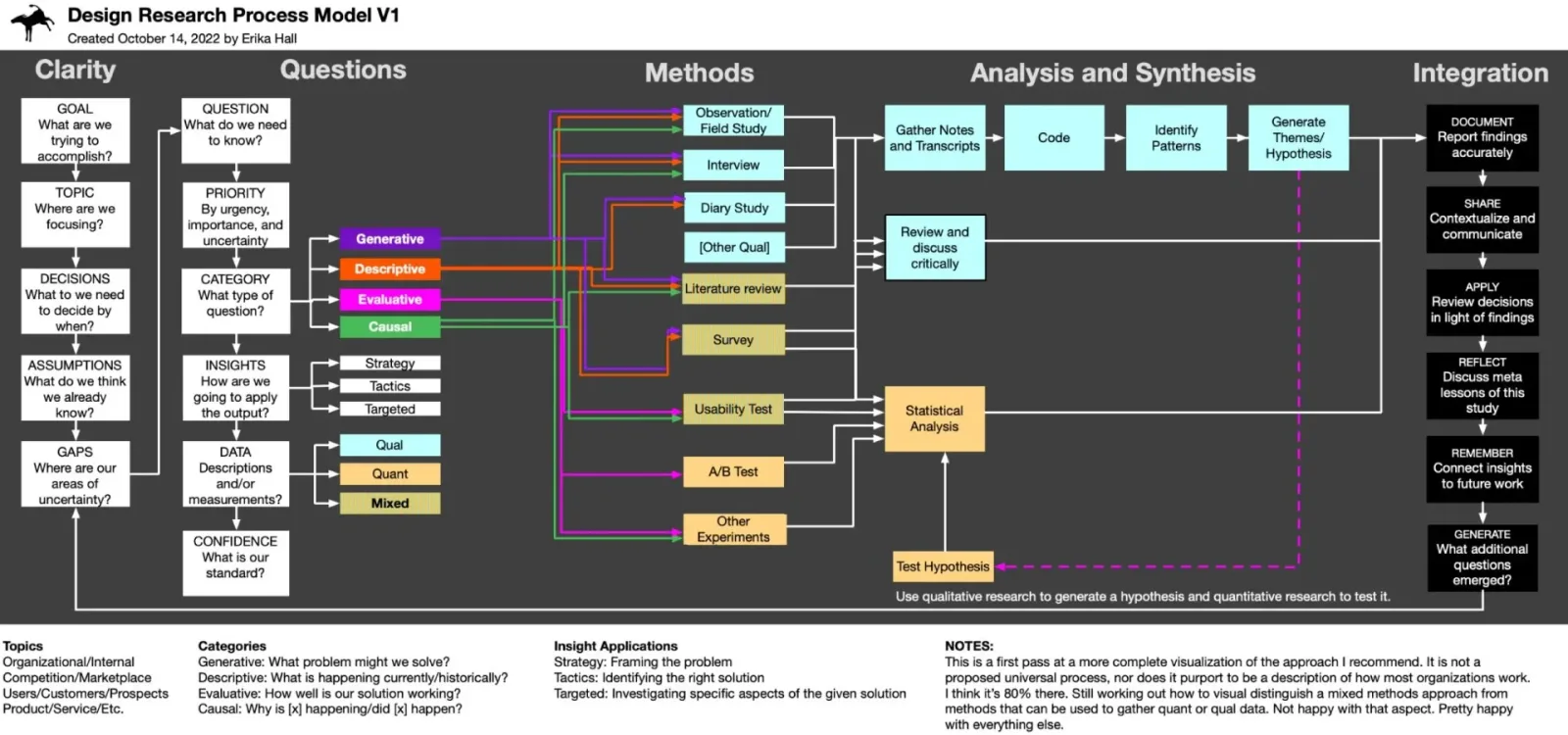
As UX designers in this project, we focused on:
- Understanding customer and user challenges
- Understanding challenges faced by various organizations, such as regulatory and/or legislative challenges and requirements from the EU
- Identifying opportunities for improvement
- Formulating hypotheses
- Designing solutions
The work took place in a cross-functional product development team where we coordinated design work among several different project groups.
Empathy mapping
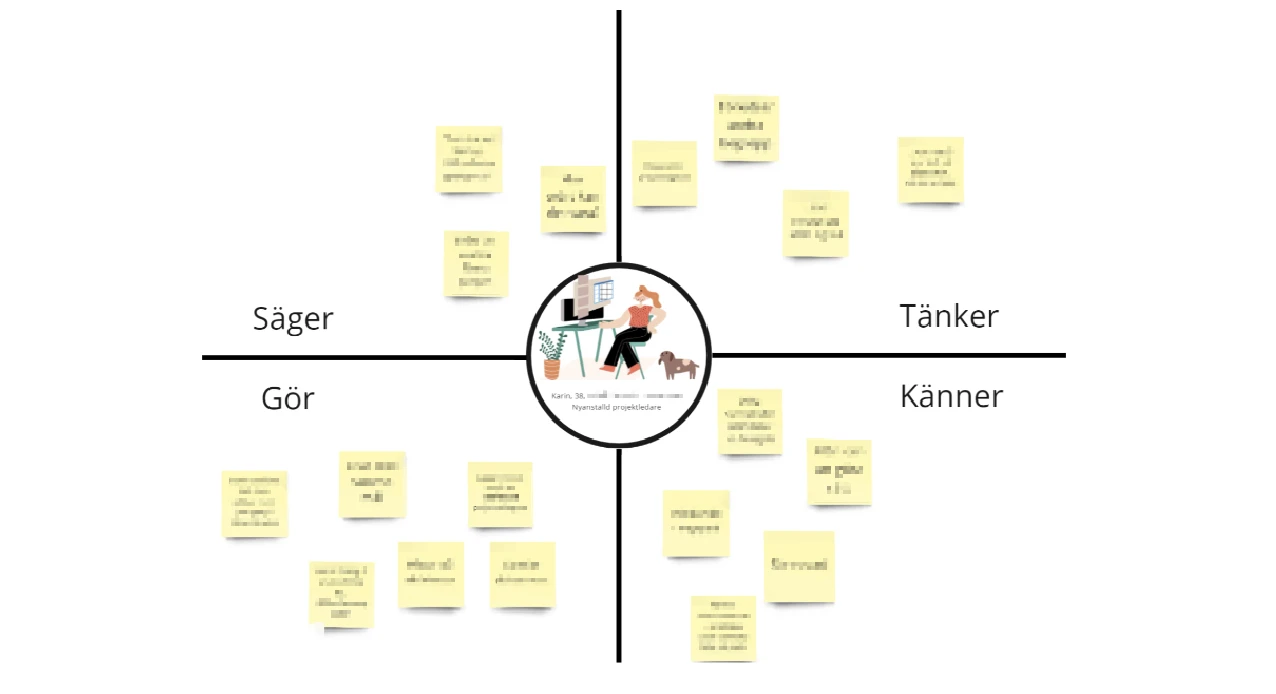
Since there was a lot of internal knowledge about user groups, we created empathy maps early on. These provided us with a starting point for possible hypotheses.
The main purpose was to early include and create consensus around a user-centered working method.
Hypotheses
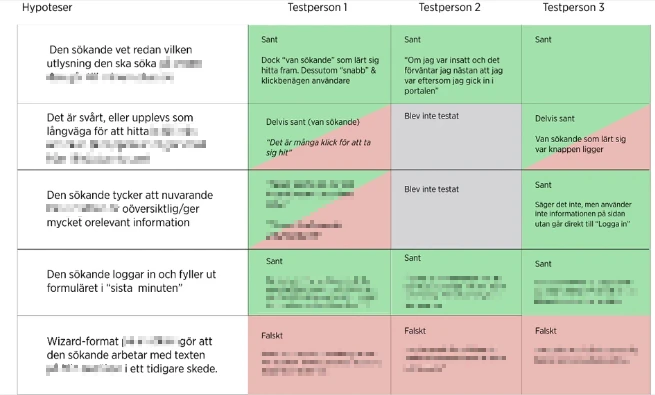
We knew there were various identified areas for improvement, such as:
- It was difficult to find the right funding
- It was unclear to users exactly what we needed to process their application
Based on these areas for improvement, we created hypotheses about what could solve them. For example, direct links from the funding offer (calls) to the application form will help applicants find the right information.
Validating hypotheses
To validate our hypotheses and to learn more, we conducted:
- Interviews with applicants and project partners
- Interviews with case officers
- Statistical analysis, to identify overall user patterns
- Usability tests, whose main task is to answer whether we are heading in the right direction, should we build something? Or have we built it correctly?
Interviews are an effective way to learn a lot and avoid creating bias in the interviewee.
These working methods provide product teams with an overall understanding of users and customers and how we can solve problems.
Sharing insights
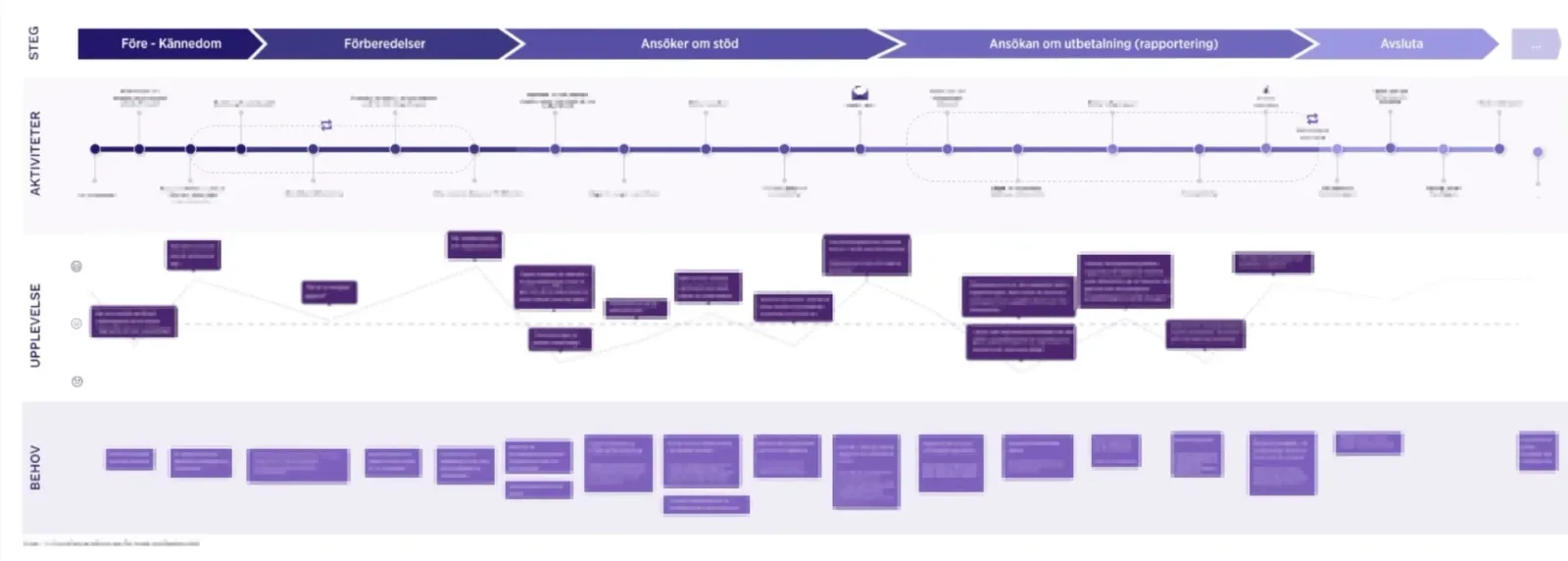
No user research is worth anything if it is put in a report and filed away in a “drawer.”
We used a customer journey as a way to compile and visualize what we had learned. It illustrates customers’ or users’ pain points and serves as a guide for which product areas are important to focus on to improve and inform everyone involved in the project about the reality of our users.
Results
- An updated digitalized application flow
- Design principles incorporated into the work
- An application that clarifies and guides those running projects according to the agency’s expectations
- It is now easier for a case officer to assess and ensure that support is given to the projects that will be of greatest benefit to society