UX audit of a sustainability reporting system
Beyond CSRD is Davcon's platform for sustainability reporting under the EU's CSRD directive. We carried out a UX audit, redesigned the interface from tables to cards, and built a new flow for supplementary information.
Background
Beyond CSRD helps European companies collect, store, and analyze sustainability data to meet the EU’s Corporate Sustainability Reporting Directive (CSRD). The legislation requires thousands of companies to report environmental, social, and governance aspects in a structured way.
Davcon had built a system that worked technically. But it had grown organically and was table-based throughout. The interface was dense and data-driven, which created cognitive load in an already complex area. At the same time, new requirements around GHG reporting (greenhouse gases) needed to fit into the system.
What made the assignment extra challenging was that the legislation was so new. Neither the product team nor the end users had established ways of working to lean on. We needed to understand how users would likely work, not how they worked today.
What we were responsible for
We took full responsibility for the UX audit, mapped the existing flow, and produced redesign proposals. The assignment was a shorter effort but required a broad approach, from understanding the requirements of the legislation to designing entirely new functionality.
How we proceeded
Understanding the context
Before we could design, we needed to understand what the system was actually meant to support. We familiarized ourselves with the CSRD directive and the GHG requirements at an overall level. Enough to understand the users’ responsibilities, what data needs to be collected, and how the reporting flow fits together.
A walkthrough of the entire flow
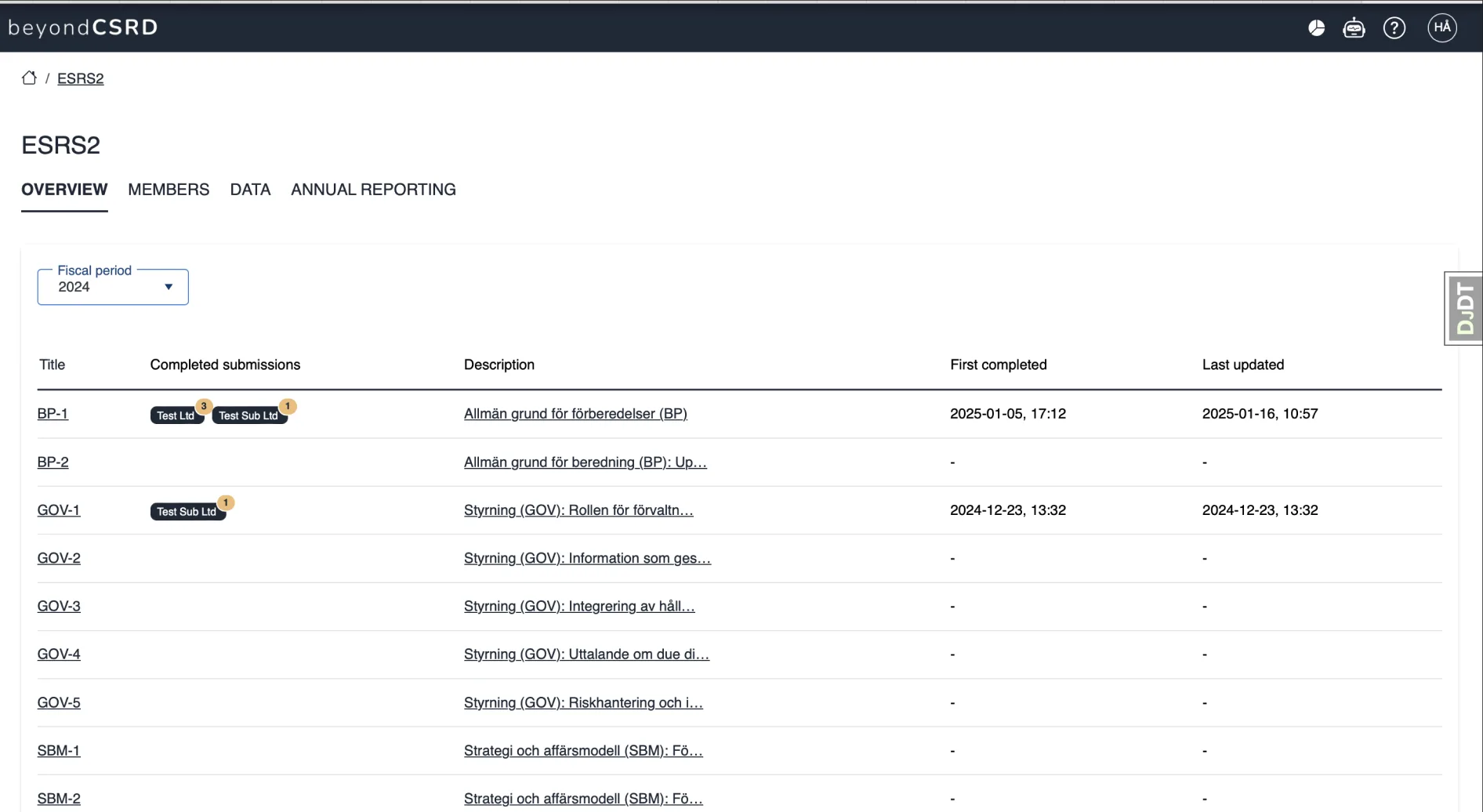
We made a systematic walkthrough of the existing system and mapped how a user gets from the start to a finished report. That gave us a clear picture of where friction arose and where the design did not reflect how the work was actually done.
From tables to cards
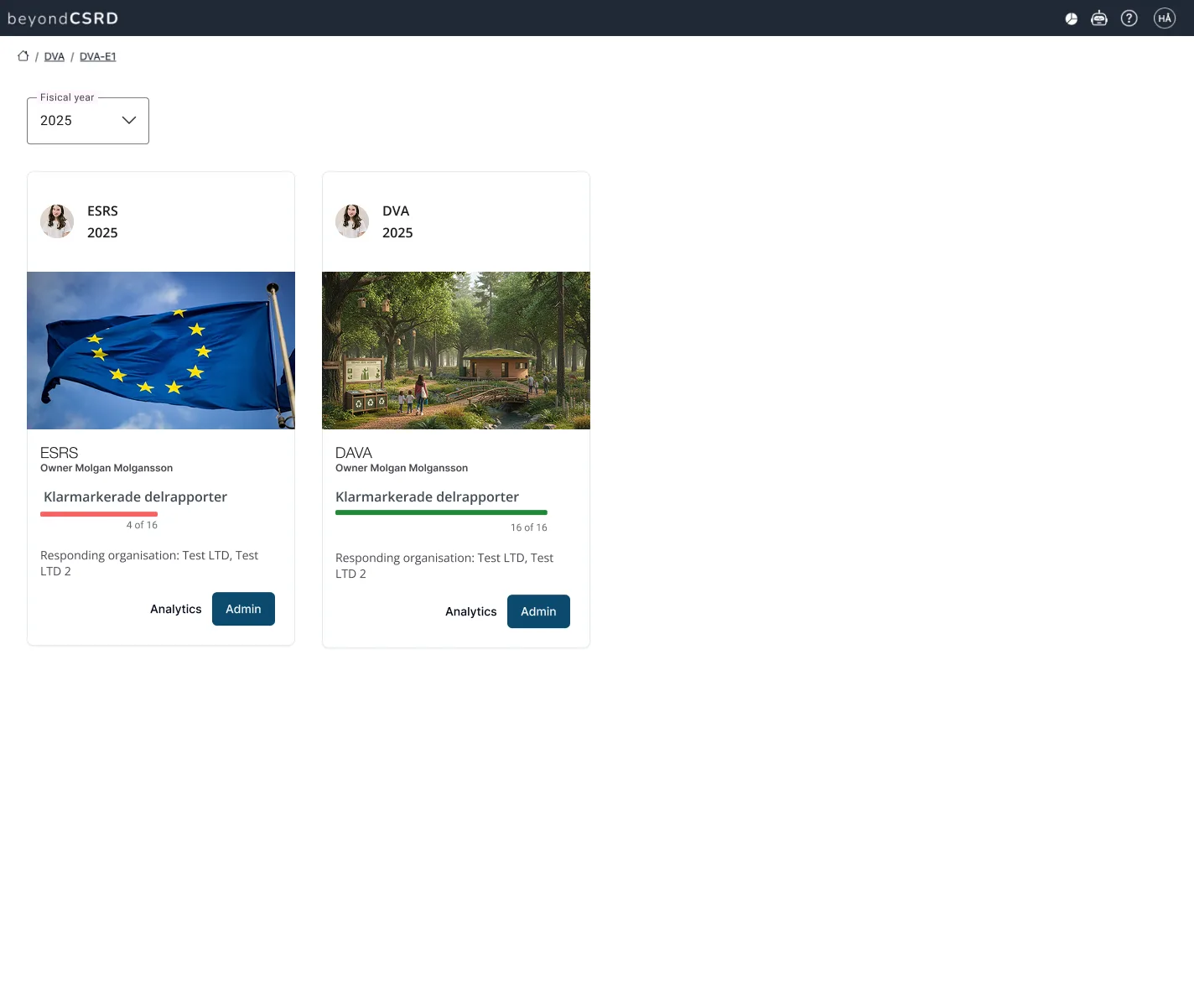
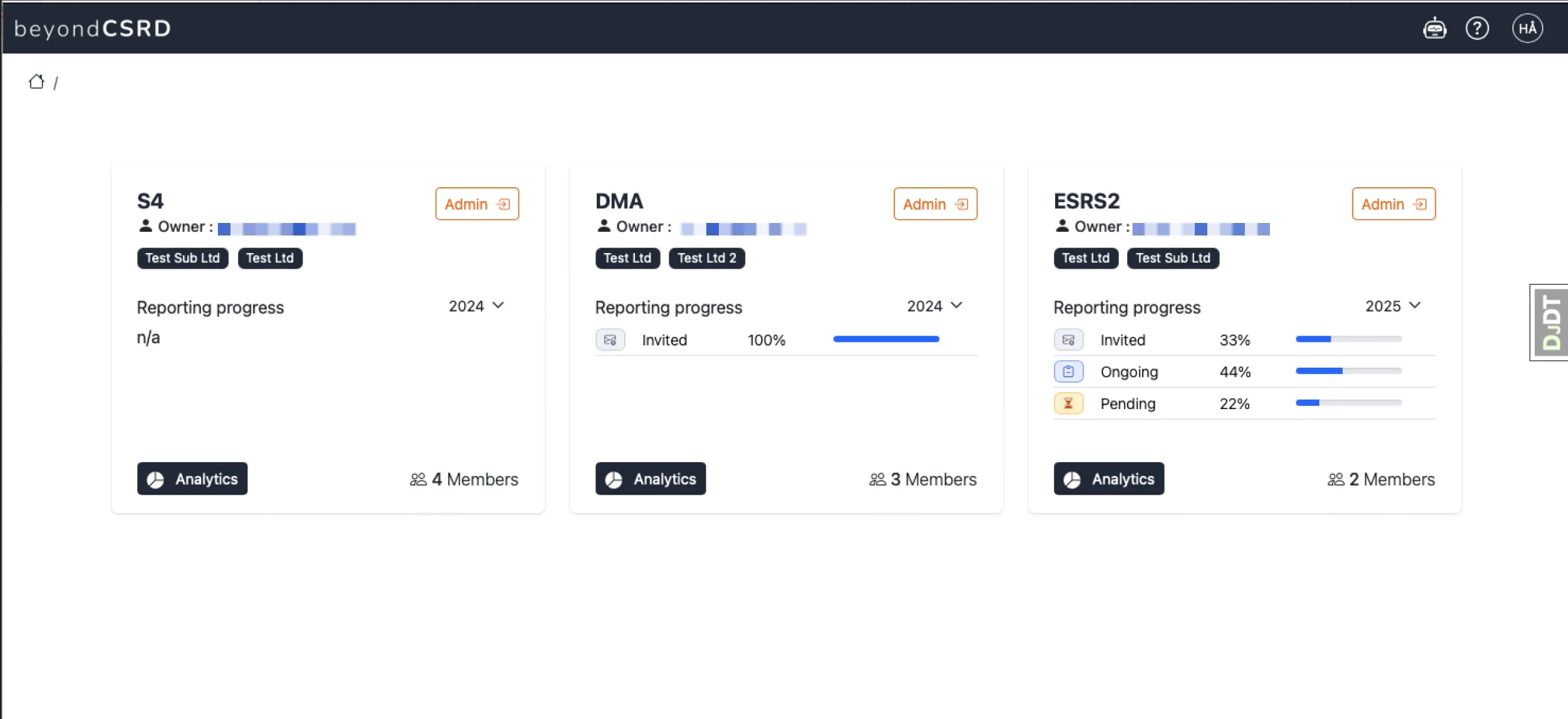
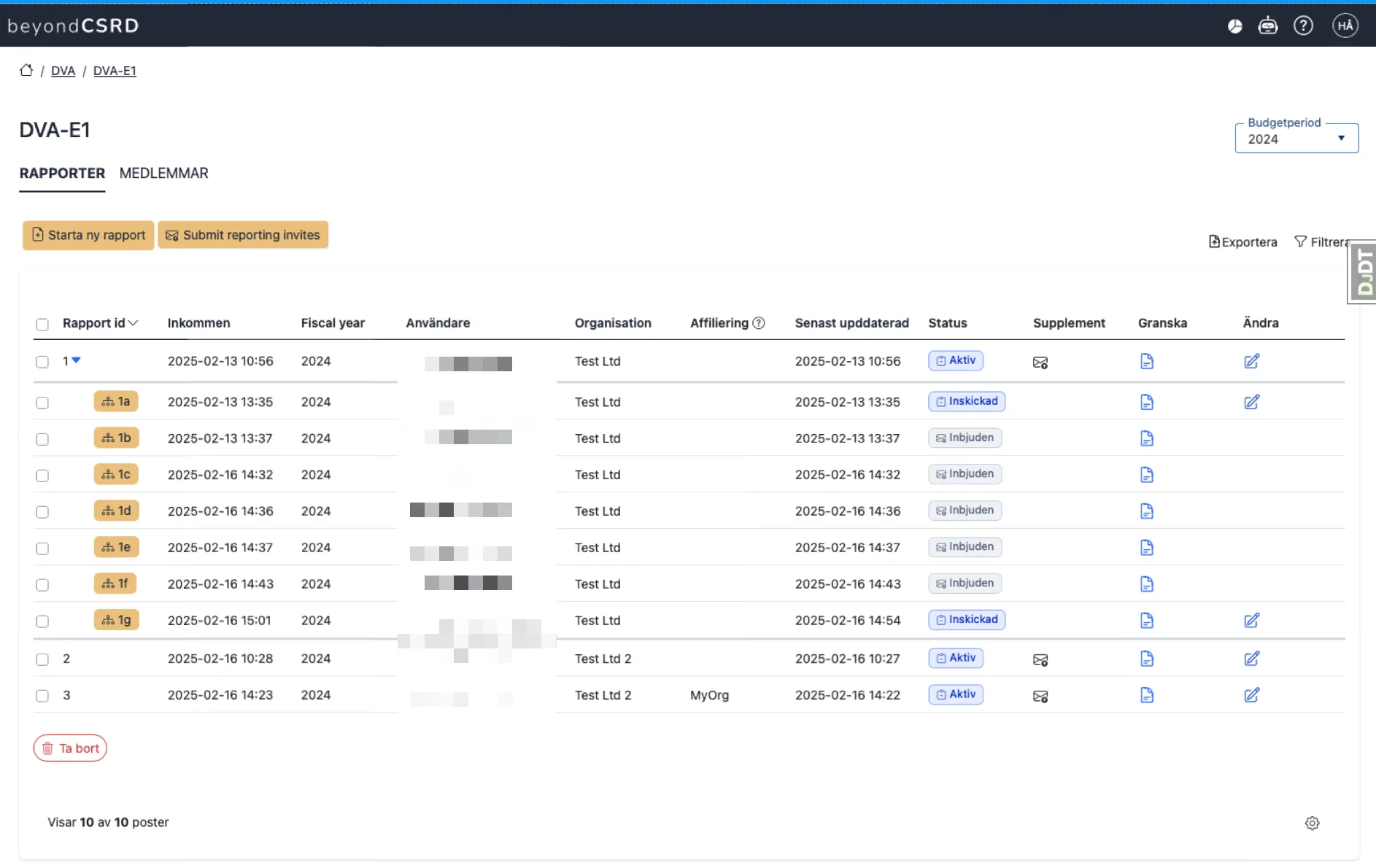
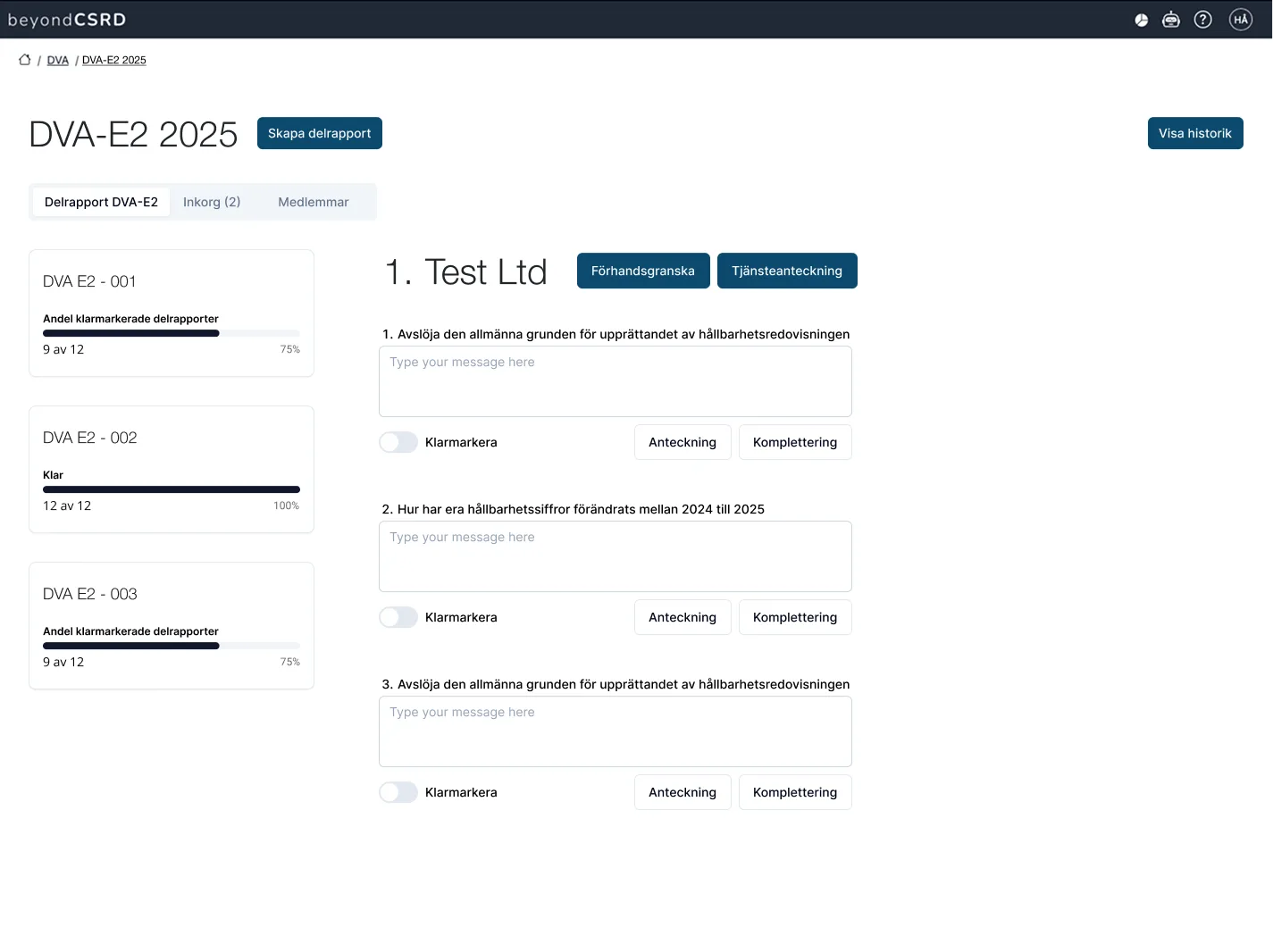
The existing system was table-based throughout, with dense data views and many columns. We identified that this created unnecessary cognitive load, especially in a system where users already need to keep many things in the air at once. The redesign moved toward a card-based design that gives a better overview, a clearer hierarchy, and a more modern feel.
An inbox for supplementary information
One of the new features we designed was an inbox for supplementary information. The system needed a structured way to handle situations where information is missing or needs to be added, a flow that had not existed before. We designed the inbox and the supplementary information flow as a natural part of the system.
GHG reporting
The new requirements around greenhouse gas reporting needed to be addressed and integrated into the system. We considered how it could best be presented to users and designed a flow that handles the new requirements without disrupting the rest of the work.
Results
- A redesign from a table-based to a card-based interface, clearer and easier to navigate
- A new inbox and a structured flow for supplementary information built into the system
- GHG requirements addressed and integrated into the design
- Positive reactions from clients during the review of the new design
Lessons learned
- Designing for new legislation requires extra context work. You cannot start from established user patterns when no one has them yet.
- A well-structured, shorter effort can have a big impact when the scope is clear and the work is focused.
- Dense table views can feel technically correct but create friction in complex workflows. Card-based interfaces often provide better cognitive relief.