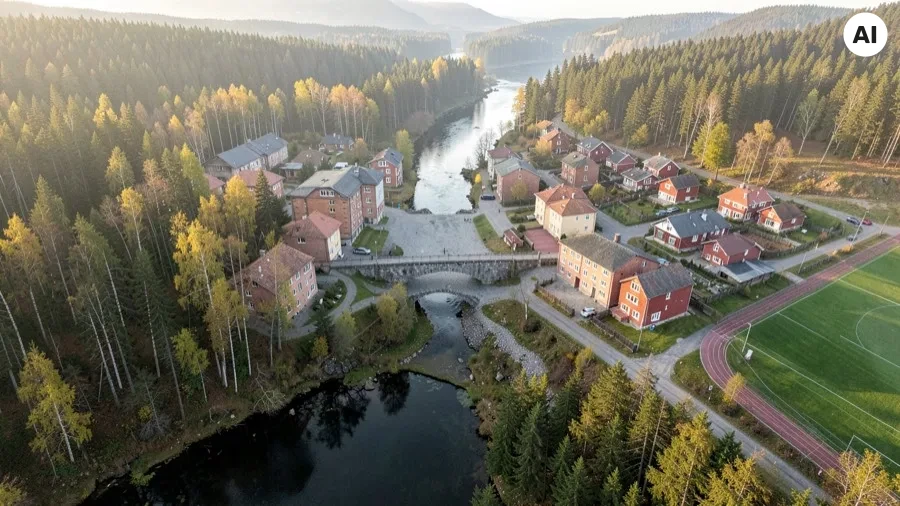
Klarby: the municipality that doesn't exist
Youth centres attract different young people, run different activities and can be packed one evening and empty the next. How do you design one app for all of them? We built a fictional municipality out of a year of research. It's called Klarby.
How do you design an app that has to work at every youth centre in a municipality?
Youth centres have a lot in common, but they are not the same. Different centres attract different young people. Some run activities almost every evening, others are more of a place to hang out. Some have lots of visitors, others fewer. And the same centre can be packed one evening and almost empty the next.
When we designed Hajpa, an app that brings staff, young people and guardians together around a municipality’s youth centres, we needed to keep all those differences in mind at once. The answer was a municipality. Not a real one, but a model. It’s called Klarby.
We gathered a year of research into a fictional municipality with three youth centres and six people.
It gave us faster iterations, better decisions and a shared language with our customers. And we can show a whole municipality without a single real young person.
The research came first
Klarby wasn’t invented at a desk. It grew out of a year of fieldwork at real youth centres.
We have talked with young people and their families, visited centres in the evenings and interviewed staff about what takes up their time. We have tested prototypes with young people over many rounds and rebuilt whatever didn’t hold up.
At the same time, we have talked with municipalities around Sweden about how to reach young people as the channels shrink, and what the local committee wants to be able to follow up on.
The patterns were clear. Staff wanted to meet young people in a personal way and show that they are there for them, but their evenings went to paper lists and posters. Young people wanted to know what’s happening tonight without having to look for it. Parents wanted to know there are adults on site, but most didn’t want to track their children. And the municipality’s channels reached fewer people every term.
The problem wasn’t that the material was thin. It was that it was scattered. Hundreds of observations are hard to keep in your head when you are deciding on a single button.
The municipality that doesn’t exist
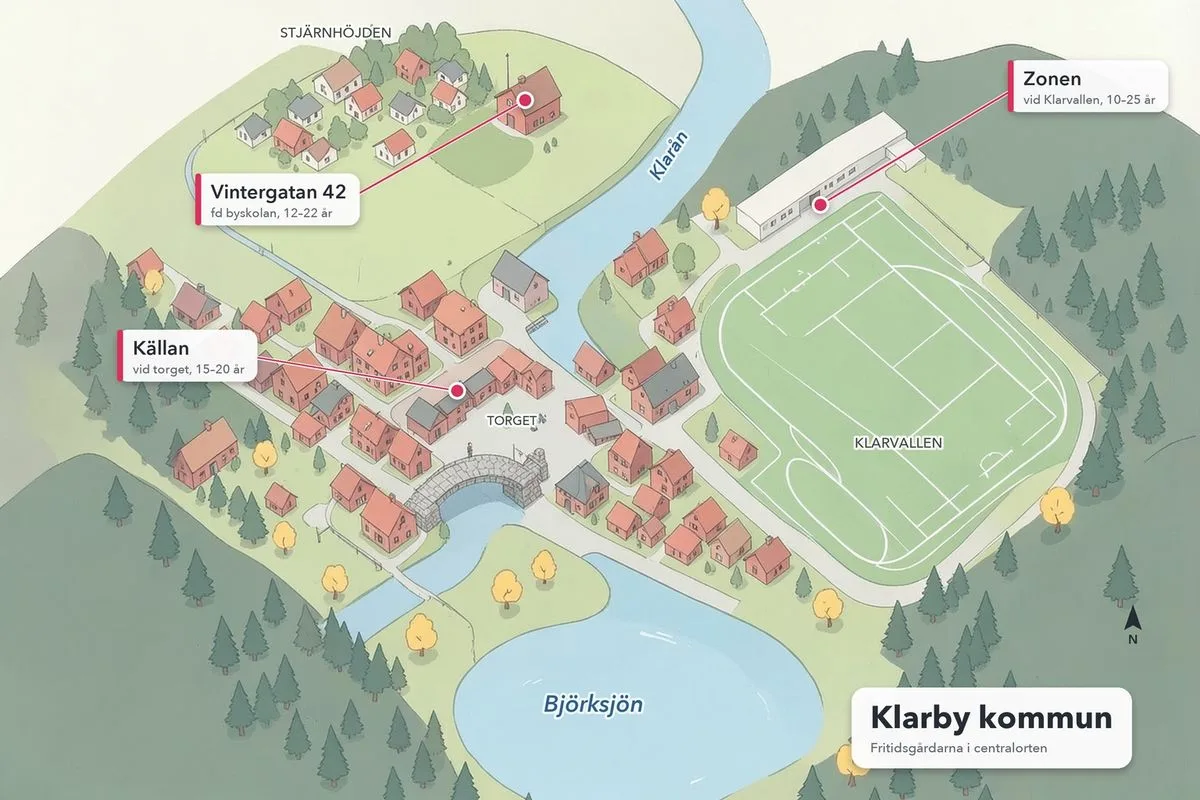
Klarby is in Värmland and has 24,000 residents. It has three youth centres: Källan by the square for ages 15 to 20, Zonen by the sports ground for ages 10 to 25, and Vintergatan 42 in an old village school for ages 12 to 22.
Six people live there: the young people Sam, Ebba, Amina and Noah, the youth worker Kim, and Lena, who is Sam’s mum. None of them exist. Each one carries patterns we have seen in many people, but none is a copy of a real person. The images are AI-generated, and we say so in everything we publish.
A place to test
The most important thing about Klarby is that we can test what we build against a town and its needs before it meets a real youth centre. Every new feature is tried in Klarby first. Does it work for Amina, for Kim and for Lena? That makes the tests with real young people and real staff better, because the obvious mistakes are already gone.
The idea comes from digital twins, but Klarby isn’t one. According to the ISO/IEC 30173 standard, a digital twin is a copy of something real that is kept in step with the original through data. Klarby has no real original. The closest concept is what the Swedish Transport Administration calls a synthetic population: fictional individuals who together reflect patterns in the real world. No real young person has been copied into Klarby.
Why it works
We have used personas before. The difference is that the people in Klarby live in a context: the centres have opening hours and distances between them, and the bus runs every twenty minutes. That makes three things possible that a standalone persona can’t.
- Faster iterations. We don’t have to start with “who does this apply to?”. We ask what happens for Amina, 14, whose account should work at Zonen and Vintergatan 42 but not at Källan. The answer takes a few minutes to reason through, and it comes out the same every time.
- Better decisions. The model makes conflicts visible. Kim wants to say hi to Sam before his jacket is hung up, so he needs to know when someone arrives. But he doesn’t want to stand with his phone in his hand all evening. The solution was a notification when someone checks in and a list of who is on site that can be read at a glance. Then the phone goes down.
- A shared language. A head of youth services, a data protection officer and a politician have different questions. Klarby lets us answer all of them with the same story. The data protection officer follows what is stored about Ebba and why. The head of youth services sees Kim pull up the statistics on his phone instead of counting paper lists.
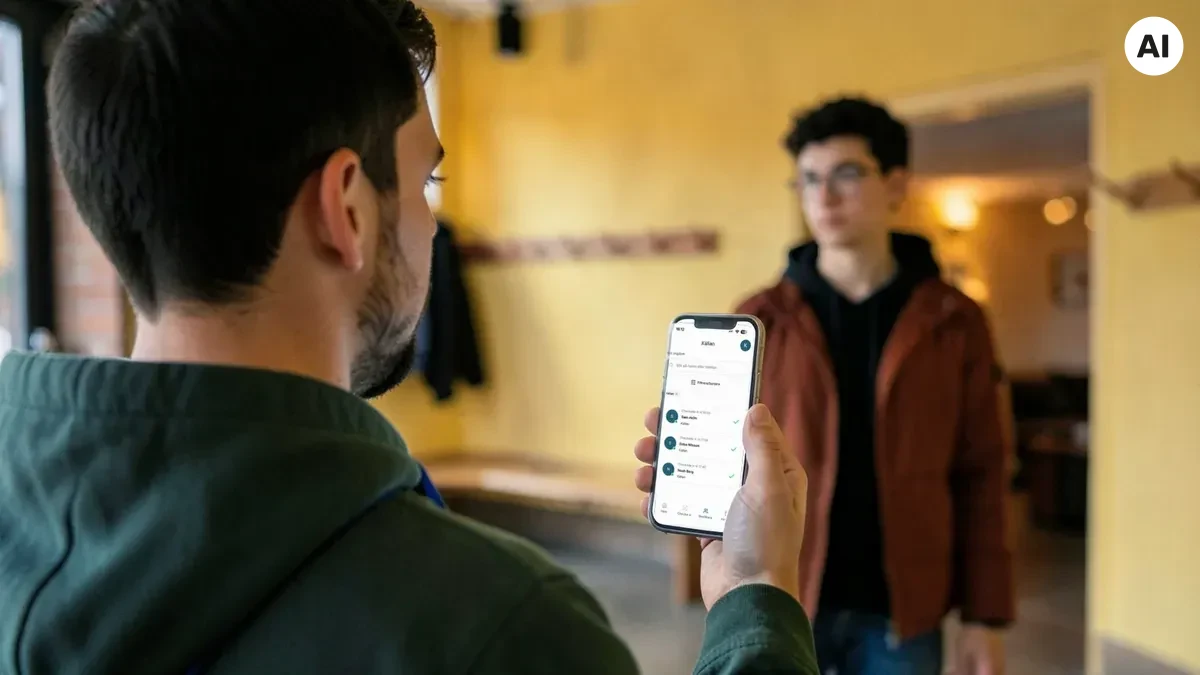
Hajpa is used by children and young people, so everything we show outside a customer municipality has to work without real personal data. Klarby gives us a whole municipality to show instead.
What the model is not
Klarby doesn’t replace the research, it summarises it. When we are unsure, we go back to the interviews, not the other way round. Otherwise the model quickly becomes a mirror of our own assumptions.
That’s why we have rules. The people can only use features that exist in the app. A scene that shows something the app doesn’t do is cut, however good it is. And everything to do with consent and the guardian’s role follows the same glossary as the product and the agreements, because those words carry legal weight.
The bridge to reality
In October 2026, Hajpa went live at the Lillsjön youth centre in Östersund municipality, with real young people and real staff.
It tests both the app and the method. Do young people check in at the door and then put their phones away, like Sam does? Do staff have time to say hi? We don’t know yet. We will share what we learn, including what didn’t hold up.
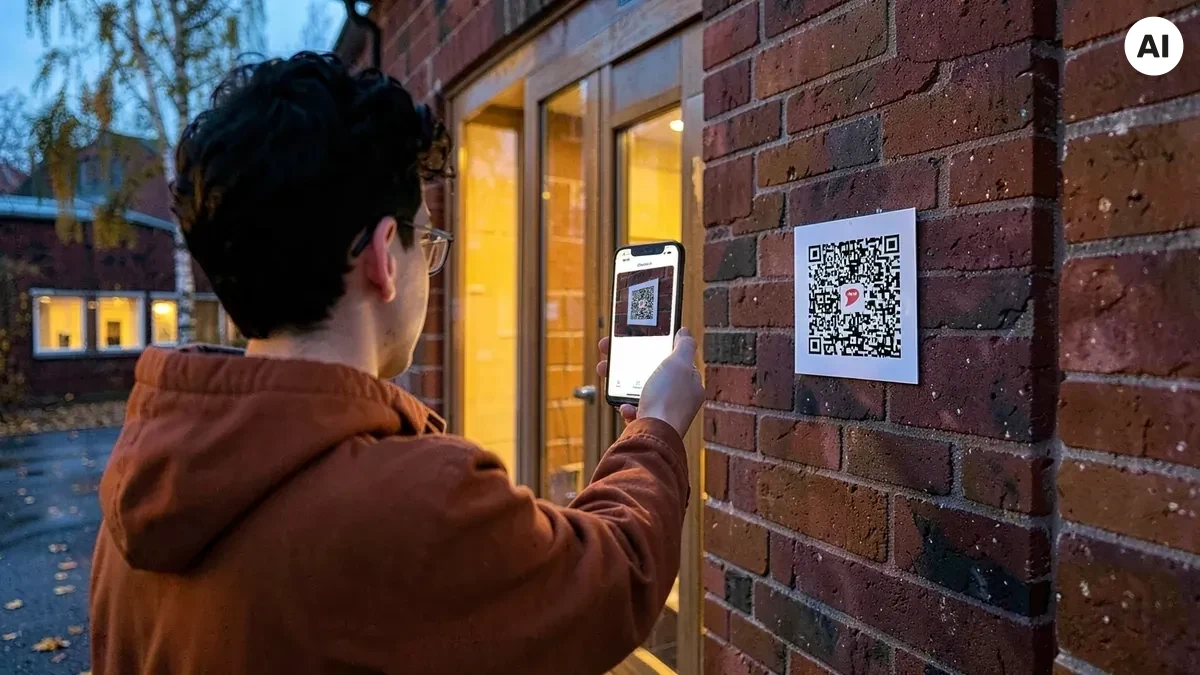
If you want to see the town, the youth centres and the people who live there, Klarby is on hajpa.nu.
Klarby is a concept from Hajpa, developed in collaboration with uxare.design.
Klarby is a fictional municipality. People, places and images are AI-generated. Klarby is based on research with young people, families and staff at real youth centres, and on conversations with municipalities around Sweden.
This text was co-created with Claude. We know what we want to say, but we used Claude to draft suggestions that we have read, adjusted and taken a stand on. The phrasing, opinions and choices are ours.